
Deep drawn stamping produces seamless, leak-proof metal enclosures where part depth exceeds diameter. Basically, no welding, no joints, no failure points. Therefore, for EV battery shells, aerospace sensor housings, and industrial motor enclosures, it delivers structural integrity that fabricated alternatives cannot match. Ultimately, the process is defined by material flow — not material removal.
Why Choose Deep Drawn Stamping for Industrial Metal Enclosures?
Deep drawn stamping forms metal enclosures where depth exceeds diameter — producing seamless, leak-proof, high-strength parts in a single operation. For EV battery shells, aerospace sensors, and motor housings, the process eliminates weld seams and joint failures. As a result, deep-drawn components outperform fabricated enclosures on every structural and dimensional metric.
Seamless vs. Welded: A Direct Manufacturing Comparison
Not all metal enclosure manufacturing methods deliver equal results. Here is how they compare:
| Feature | Deep Drawn Stamping | Standard Progressive Stamping |
|---|---|---|
| Part Geometry | Cylindrical, box-shaped, seamless enclosures (Depth > Diameter) | Flat, shallow bends, brackets, and clips |
| Material Integrity | Seamless construction (Water/Dust proof) | May require welding for enclosures |
| Best Applications | EV battery casings, motor housings, and medical sensors | Connectors, lead frames, shielding covers |
Material Flow, Not Material Removal: The Physics Behind the Process
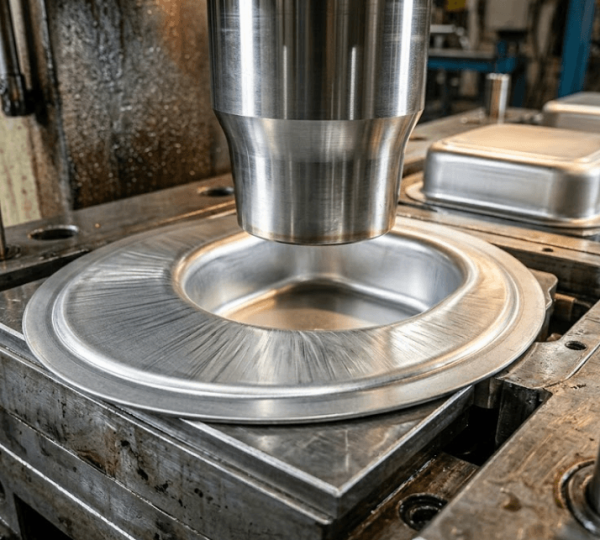
Deep drawn stamping works by flowing metal — not cutting it, grinding it, or welding it. Specifically, a punch forces a flat blank into a die cavity, compressing and redirecting material into the desired enclosure geometry. In turn, the metal grain structure remains continuous throughout the part wall. Therefore, a deep-drawn EV battery shell carries no internal stress concentrations from heat-affected zones or machined surfaces.
The critical engineering variable is the draw ratio — blank diameter divided by punch diameter. According to the Society of Manufacturing Engineers, draw ratios above 2.0 typically require a redraw operation to avoid tearing. That said, Chaoyang engineers design draw ratios and redraw sequences for each part geometry, ensuring material flow stays within formability limits.
Moreover, blank holder force is equally critical. Without sufficient pressure, the flange material wrinkles as it flows into the die. By contrast, excessive blank holder force restricts material flow and causes tearing at the punch radius. Consequently, Chaoyang’s tooling design process includes finite element analysis of blank holder force distribution for every new deep-drawn die program.
Die Precision Determines Wall Thickness Uniformity
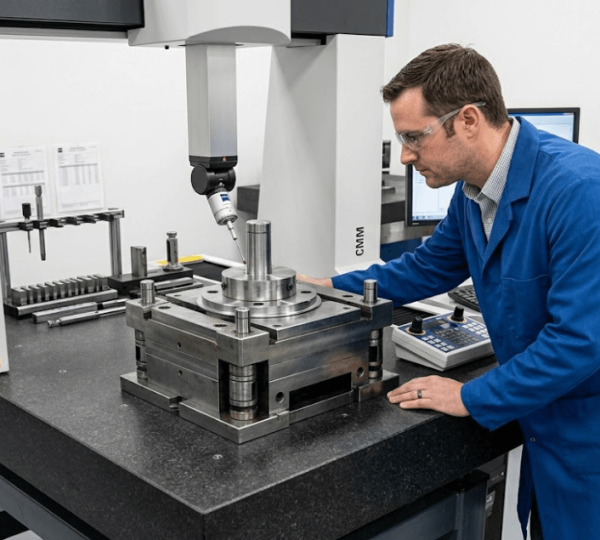
The die is not just a shape — it is a precision instrument. In fact, punch-to-die clearance directly controls wall thickness in the drawn part. Specifically, a clearance set too tight causes ironing. Clearance set too loose allows material to fold rather than flow, producing wall thickness variation that fails dimensional inspection.
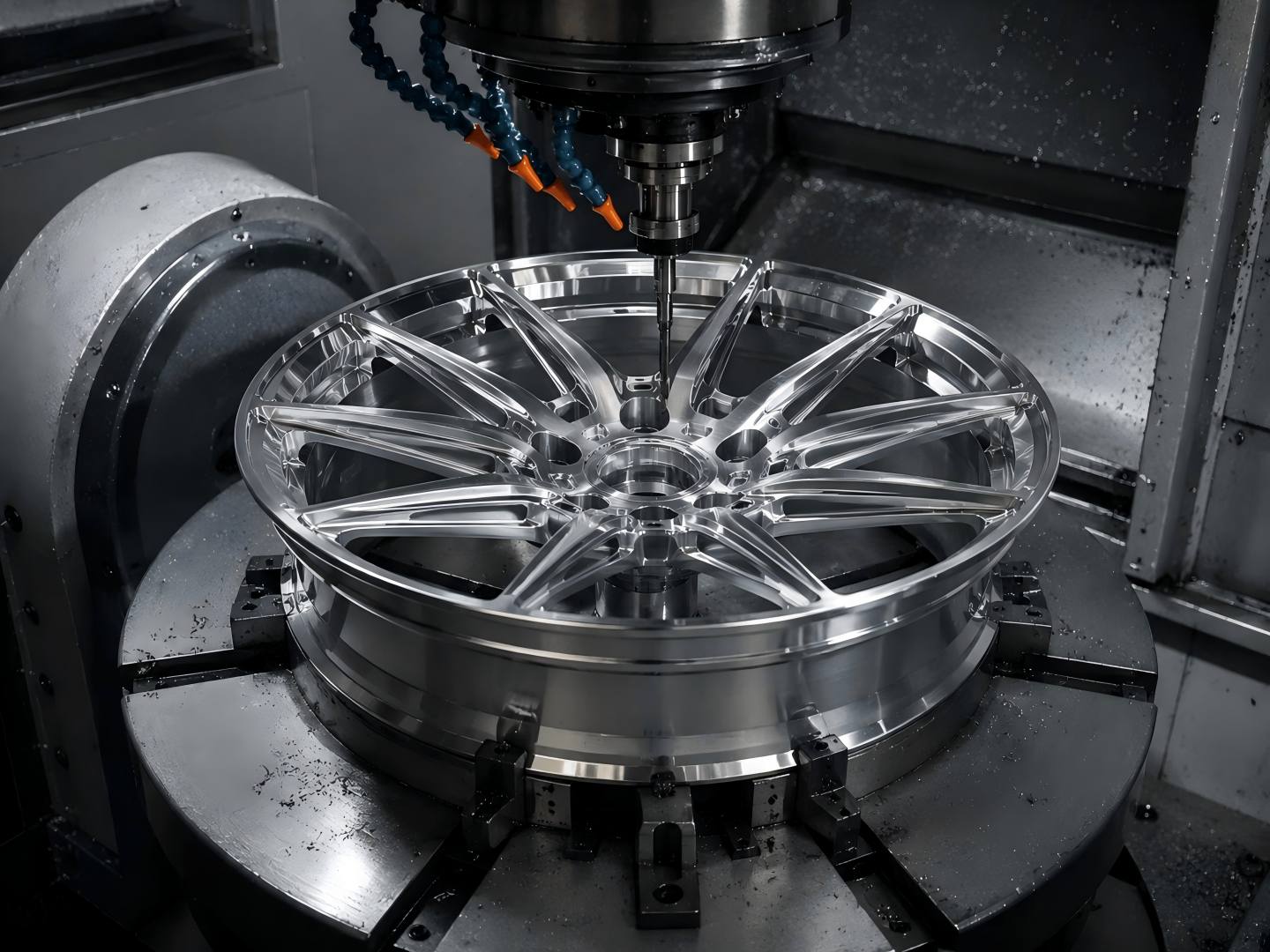
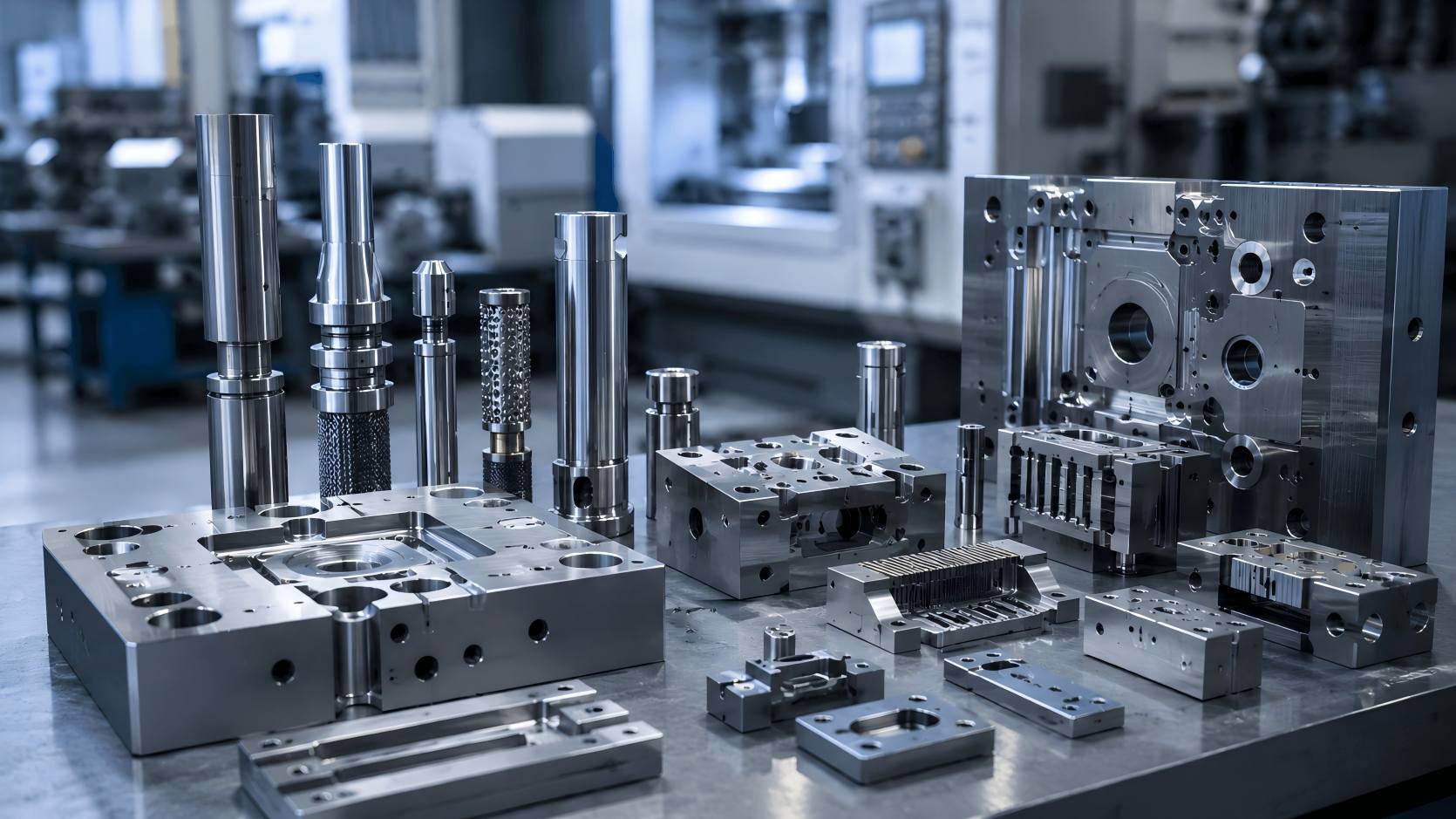
At Chaoyang, punch and die cavities are machined on YASDA high-speed CNC centres to positional tolerances of ±0.002mm. As a result, clearance consistency holds across the full draw depth. Furthermore, the radii are ground to a mirror finish on Moore Jig Grinders, minimising friction-induced thinning at the most stress-concentrated points in the draw cycle.
Additionally, the material selection matters as much as dimensional accuracy. For high-volume automotive and EV programs, Chaoyang specifies D2 or SKD11 tool steel at 58–62 HRC surface hardness. In turn, this resists galling from high-strength steel and stainless steel blanks — maintaining accuracy across millions of draw cycles.
Material Selection Defines the Performance Envelope of Deep Drawn Enclosures
Not every material draws equally. In practice, formability, springback, and surface finish vary significantly across alloy families. Specifically, the correct materials for industrial deep drawn enclosures are:
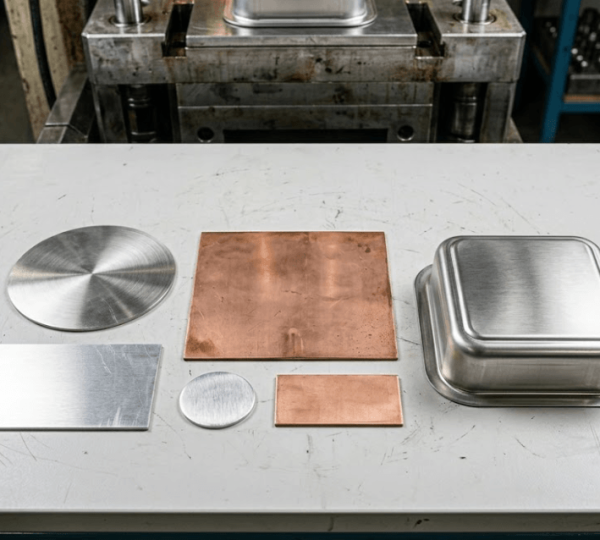
Stainless Steel 304 and 316. Both offer excellent corrosion resistance and high work-hardening rates. 304 is standard for motor housings and fluid-handling enclosures. 316, by contrast, suits marine and chemical processing applications where chloride resistance is required.
Aluminium 3003 and 5052. Aluminium draws with lower forming forces than steel. Furthermore, it is the preferred material for aerospace sensor housings and lightweight EV enclosures where weight reduction drives the design.
Copper and Brass. Both offer exceptional formability and suit electrical connector housings, thermal management enclosures, and RF shielding applications. In addition, copper’s thermal conductivity makes it irreplaceable in high-power EV and industrial electronics enclosures.
Deep Drawn Stamping Delivers What Fabricated Enclosures Cannot
Deep drawn stamping is the correct process for any metal enclosure where structural integrity, dimensional consistency, and leak-proof performance are non-negotiable. After all, EV battery shells, aerospace sensor housings, and industrial motor enclosures operate in environments where fabricated alternatives fail. Indeed, the seamless grain structure, uniform wall thickness, and high-volume cost efficiency of deep drawn parts are simply not replicable by welding or machining. Accordingly, Chaoyang engineers deep-drawn stamping dies for automotive, aerospace, and industrial programs — with full tooling design, CNC machining, and die tryout capabilities available through the precision dies team.