
From automotive brackets to electronic connectors, countless precision metal parts rely on stamping dies for stable and reliable production. However, choosing the right die structure is no easy task. Manufacturers must assess factors such as production volume, part complexity, material properties, and die investment before determining the most suitable stamping die processing method. Among the many die options, three basic types dominate industrial production: single stamping dies, compound dies, and progressive dies. Each design follows different working principles and offers advantages in terms of production efficiency, precision, and flexibility.
Types of Stamping Dies and Their Manufacturing Characteristics
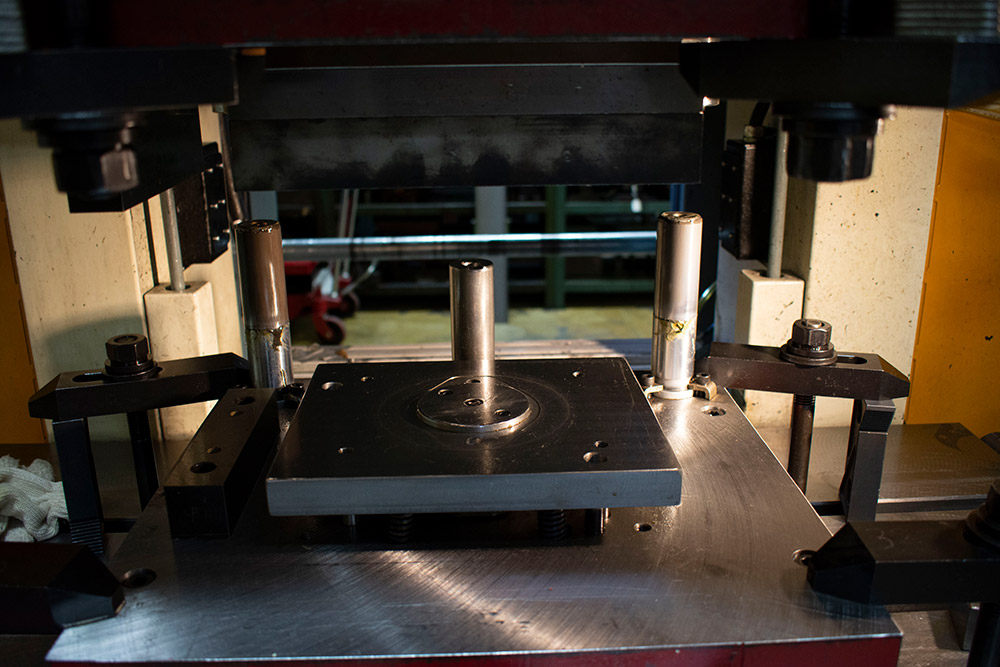
Single-stamping dies are one of the most traditional and straightforward die solutions in metal stamping. In this type of die, only one operation is performed per stamping stroke, such as blanking, bending, or punching. A sheet metal or blank is placed inside the die, the press applies pressure, and the operation is completed in a stamping cycle.
This stamping die processing method is particularly suitable for large parts, thick materials, or small-batch production. Because each process is performed independently, engineers can precisely control the forming pressure and adjust parameters to accommodate different material properties. Therefore, single-stroke dies are often used to produce large structural parts, heavy brackets, and prototype parts. Another advantage of this type of die is its relatively low cost. Compared to more complex die systems, single-stroke dies are simpler to design and have shorter manufacturing cycles. Furthermore, maintenance and repair are easier due to the fewer components in the die structure.
However, single-stroke dies have limitations in terms of production efficiency. Because each operation must be completed individually, manufacturers typically require multiple dies or additional processing steps to produce complex parts. Therefore, while this type of die offers flexibility and reliability, it may not be suitable for high-volume production environments.
Compound Stamping Dies
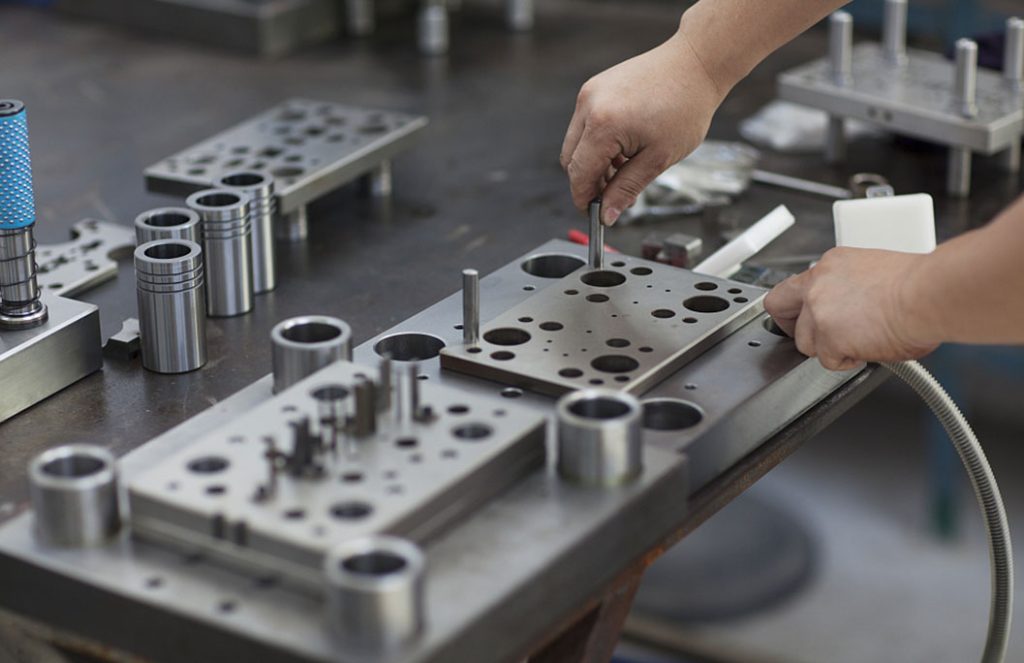
Compound stamping dies combine multiple operations into a single stamping stroke. Unlike single-stroke dies, which can only perform one operation at a time, compound stamping dies can perform two or more stamping functions simultaneously, such as blanking and punching. In compound stamping, the workpiece remains stationary while the die performs multiple operations in a single stroke. This configuration significantly improves production efficiency by enabling multiple manufacturing steps to be completed concurrently. Furthermore, because compound dies form parts simultaneously, the machined parts maintain very precise positional relationships.
Compound stamping dies are widely used in industries requiring precision flat parts, such as electrical components, gaskets, and metal seals. The ability of compound dies to maintain strict dimensional consistency between internal holes and external contours makes them particularly important in precision stamping applications. Despite these advantages, compound dies are more complex to design and manufacture than single-stroke dies. The die must carefully coordinate multiple punches and dies to ensure even pressure distribution during stamping.
Progressive Stamping Dies and Their Advantages in Mass Production
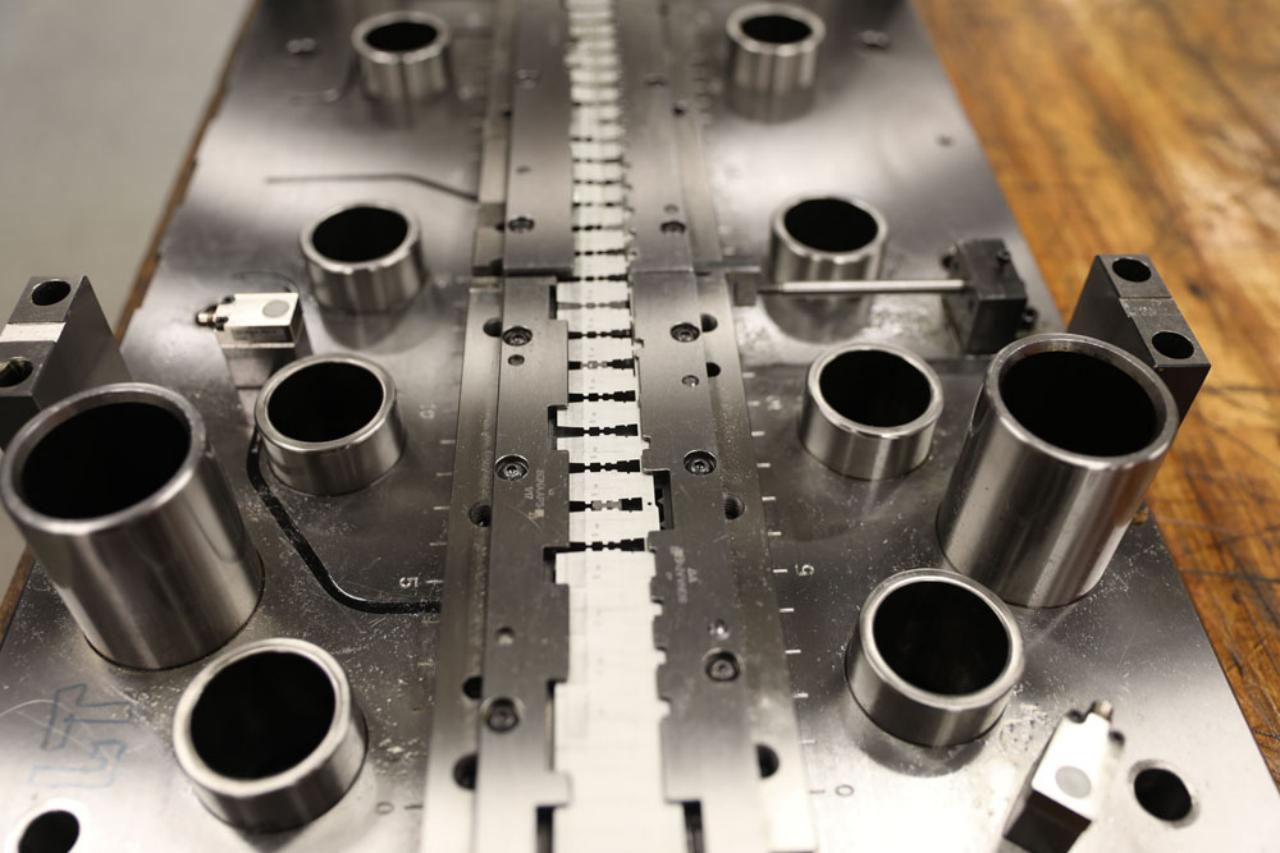
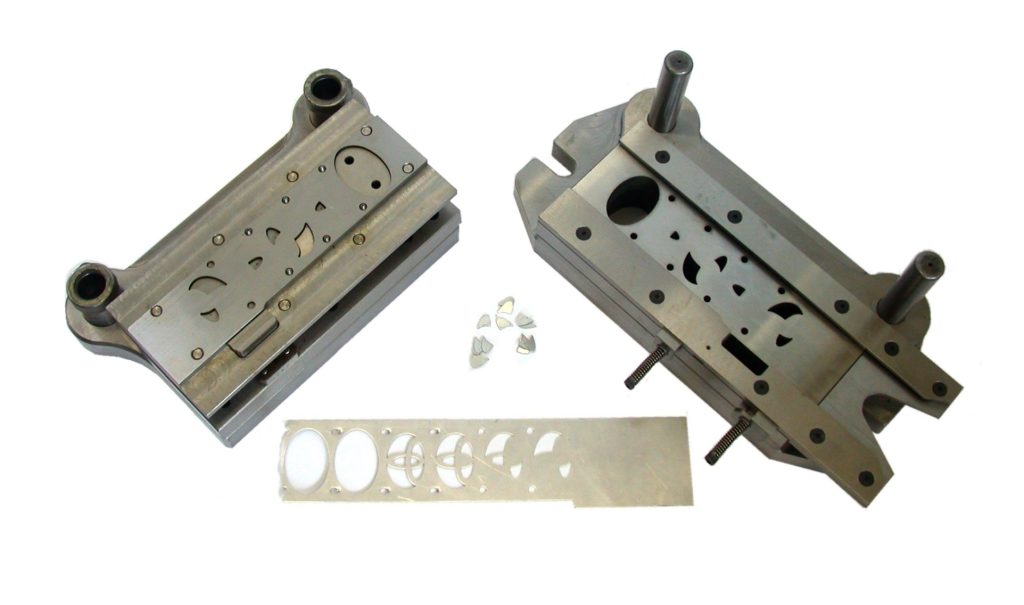
Progressive stamping dies are among the most advanced and efficient die solutions in modern mass production. In this stamping die system, a continuous strip of metal is fed into multiple stations within the die. Each station performs a specific operation, such as punching, bending, or forming, while the strip of metal advances within the die with each stamping stroke.
This stamping die processing method allows manufacturers to produce finished parts through multiple consecutive operations without removing the workpiece from the die system. As the metal strip moves forward, each station progressively processes the material until the final part is formed and separates from the metal strip. Progressive stamping dies are widely used to produce small- to medium-sized metal parts, such as connectors, clips, terminals, and electronic components. Because multiple processes are completed within a single die, production speeds can reach extremely high levels, making progressive stamping dies ideal for mass production.
Key Differences Between Progressive, Compound, and Single Stamping Dies
First, single stamping dies perform only one operation per stamping stroke. They are flexible and simple, suitable for small-batch production or large parts requiring high forming forces. Second, compound dies can complete multiple processes simultaneously in a single stroke. This allows manufacturers to maintain excellent positioning accuracy across the various features of the stamped part while increasing efficiency. Third, progressive stamping dies form the part step by step through a series of stations, with the metal strip advancing through the die to form the part ultimately. This system has the highest production efficiency and is widely used for the mass production of precision metal parts. From a stamping die processing perspective, the choice of die type mainly depends on production volume, part complexity, and die budget. Manufacturers must carefully evaluate these factors to determine the most cost-effective solution.
Choosing the Right Die Design
Each die type has its specific application in the stamping industry. Single stamping dies are simple and flexible, suitable for large parts or small-batch production. Compound dies complete multiple processes in a single stroke while maintaining high dimensional accuracy, thus improving production efficiency. Progressive stamping dies integrate multiple processing stages into a continuous production flow, making them the best solution for mass production. By carefully analyzing production requirements and material properties, the most suitable stamping die design for the project can be selected.