
TOOLING DIE SETS
- Home
- product
- TOOLING DIE SETS
What Is a Die Set?
A die set is the rigid frame of a stamping tool. It carries the upper and lower die halves on a pair of plates, keeps them aligned with guide posts and bushings, and sets the shut height with spacers. This structure holds every punch, die and forming part in position through each press stroke.
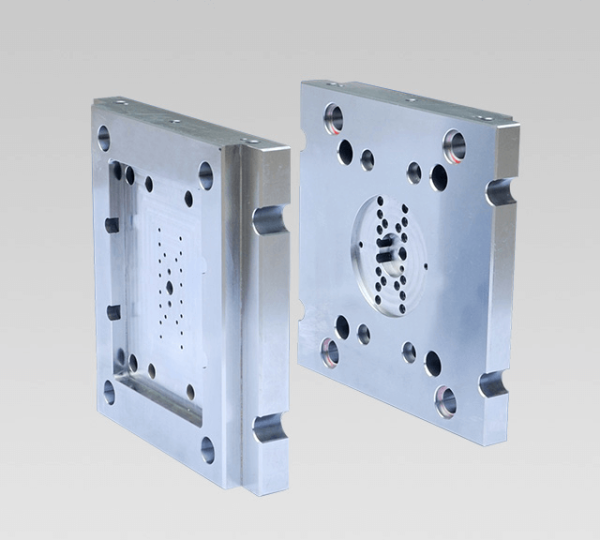
What a Die Set Contains
Most die sets are built from the same core components, arranged around your tool layout.
Carry the die components and mount to the press.
Keep the upper and lower halves aligned stroke after stroke.
Set shut height and support the plates against press load.
Hold punch and die retainers firmly in the plate stack.
Die Set Materials & Tolerances
Values below are typical reference ranges. Final material, tolerance and hardness follow the drawing and application requirements.
| Component | Material Options | Tolerance | Hardness |
|---|---|---|---|
| Upper & Lower Plates | Tool steel / Mild steel / 45# (medium carbon steel) | ±0.01–0.02 mm | 30–45 HRC |
| Guide Post & Bushing | SKD11 / SKH-9 / SUJ2 | ±0.005 mm | 58–62 HRC |
| Spacer & Support Blocks | Pre-hardened steel / Mild steel | ±0.01 mm | 28–35 HRC |
| Clamping Plates | Tool steel / Customized | ±0.02 mm | 30–45 HRC |
| Non-standard Bases | As per drawing | As requested | As required |
Standard Base or Custom Mould Set?
Most projects fall into one of two paths.
Industries We Serve
Standard and custom die sets across automotive, electronics, home appliances and consumer hardware.
What to Confirm Before Ordering
These details help us confirm whether a standard base fits or a custom set is needed.
Machining & Inspection for Die Sets
Machining capability
Plates, guide components and spacers are machined in-house.
| Process | Equipment & Brand | Capacity | Accuracy |
|---|---|---|---|
| Plate Milling & Drilling | AWEA · AGMA · Vision Wild (Taiwan) | Up to 1600 × 3100 mm | ±0.005–0.01 mm |
| Plate Surface Grinding | Okamoto · Chevalier (large surface grinders) | 600 × 1200 mm | ±0.001 mm · Ra0.02 |
| Conventional CNC | DTX850 · VLB-121 | Up to 750 × 1300 mm | ±0.01 mm |
Capacity = maximum workpiece size; accuracy = machining tolerance.
Inspection
Flatness, parallelism and hole positions are verified before shipment.
Tooling Die Sets — Common Questions
What tolerances and materials are available for die set plates?+
What is the difference between a die set and a stamping die?+
How do I choose between a standard die set and a custom mould base?+
Need a Die Set or Mould Base?
Send your die set drawing, plate sizes and press model. We review dimensions, mounting conditions and machining approach, then come back with a recommendation.

© 2025 Technical Support By LEZHAN