
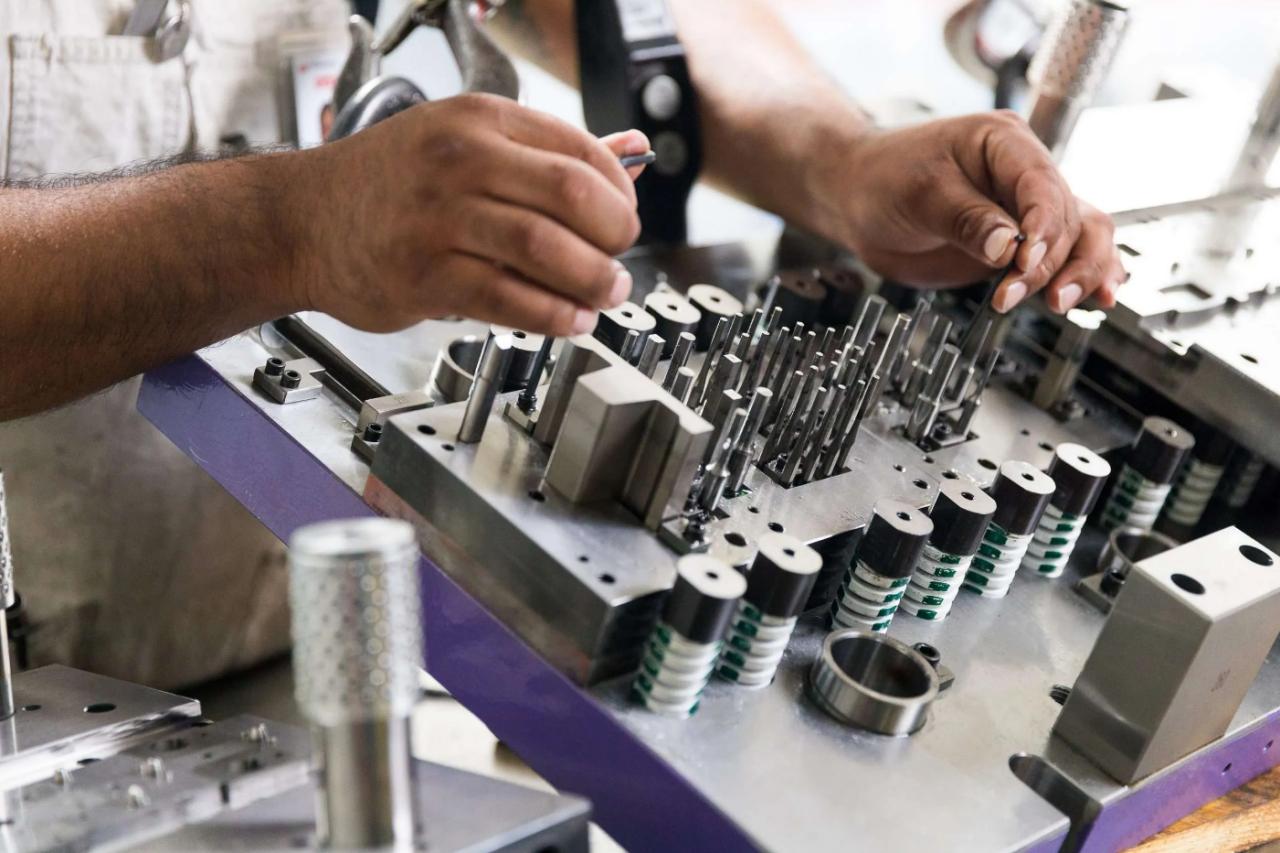
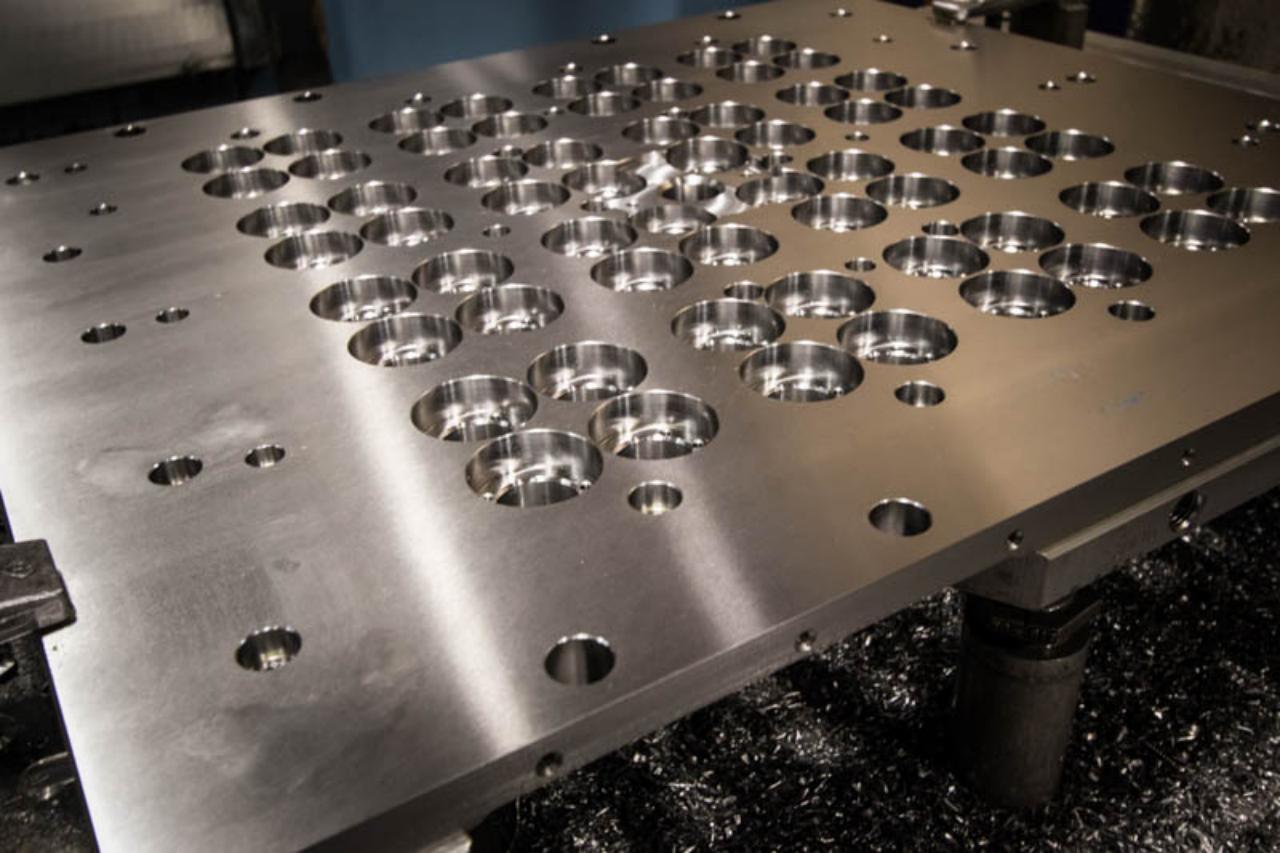
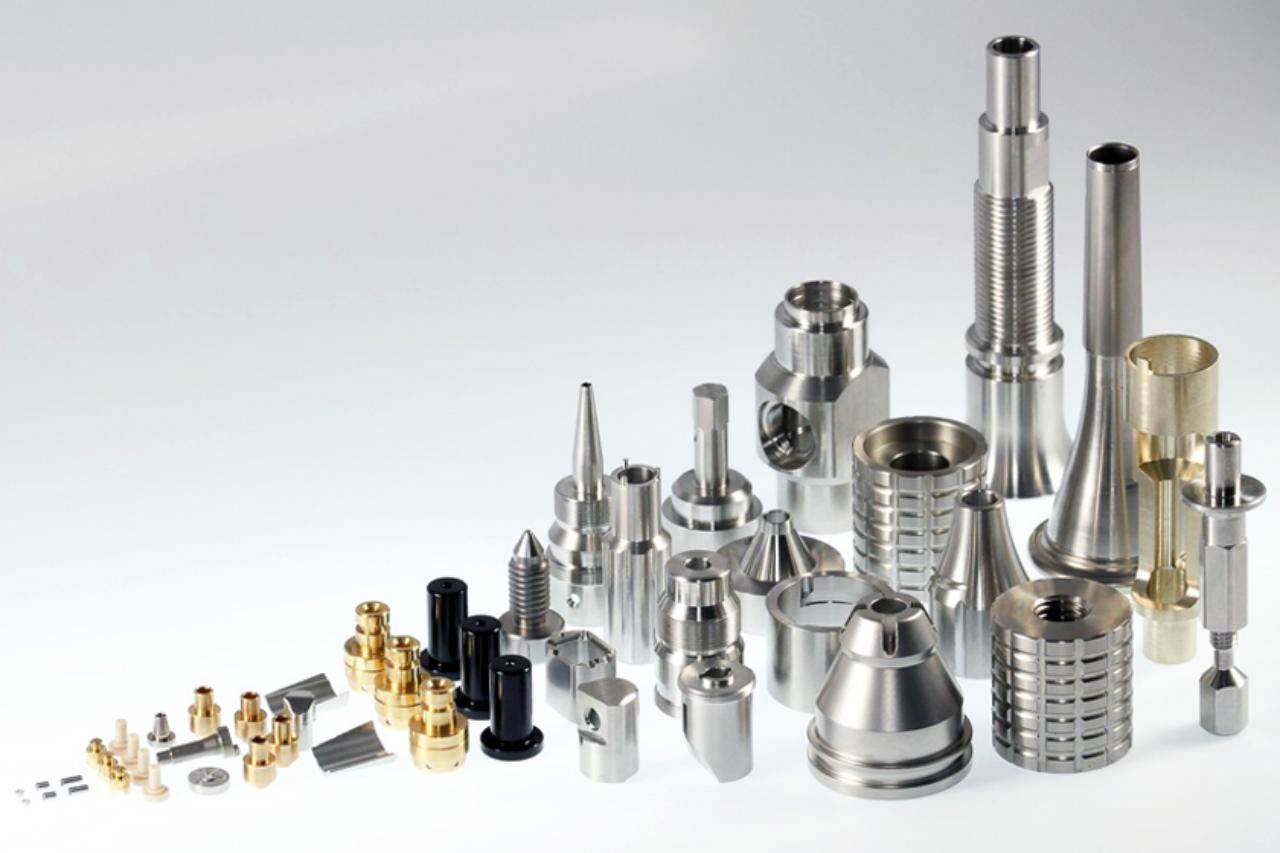
Chaoyang’s manufacturing philosophy is simple: design manufacturable, repeatable, and cost-effective die components before any part enters the production workshop. By integrating Design for Manufacturing (DFM) principles into the design phase of mold component manufacturing, we can make strategic decisions early on regarding part structure, material selection, tolerances, and tooling—reducing unnecessary complexity, shortening development cycles, and ensuring production yields. Our collaborative DFM approach, and how we utilize advanced 3D modeling and simulation technologies (UG, Pro-E, CAD, CAE, CAM), along with machining and process control, delivers precision mold components that meet the stringent tolerance requirements of stamping manufacturers, ensuring that the tolerances of key die components fabrication features are within ±1 μm.
Die Components Fabrication Design for Superior Mold Matching
In die component fabrication, Chaoyang employs a collaborative Design for Manufacturing (DFM) approach for mold matching. We do not design components in isolation, but simultaneously evaluate part geometry, structural logic, material properties, tolerance feasibility, and production scalability. Through DFM analysis, we assess factors such as stress concentration, heat treatment deformation risk, machining ease, and long-term wear performance. This proactive approach ensures that mold components are not only theoretically sound but also capable of large-scale production in practical applications. Therefore, we reduce redesign cycles, shorten delivery cycles, and improve mold matching efficiency during assembly and trial molding.
3D Modeling and Simulation in Die Components Fabrication Design
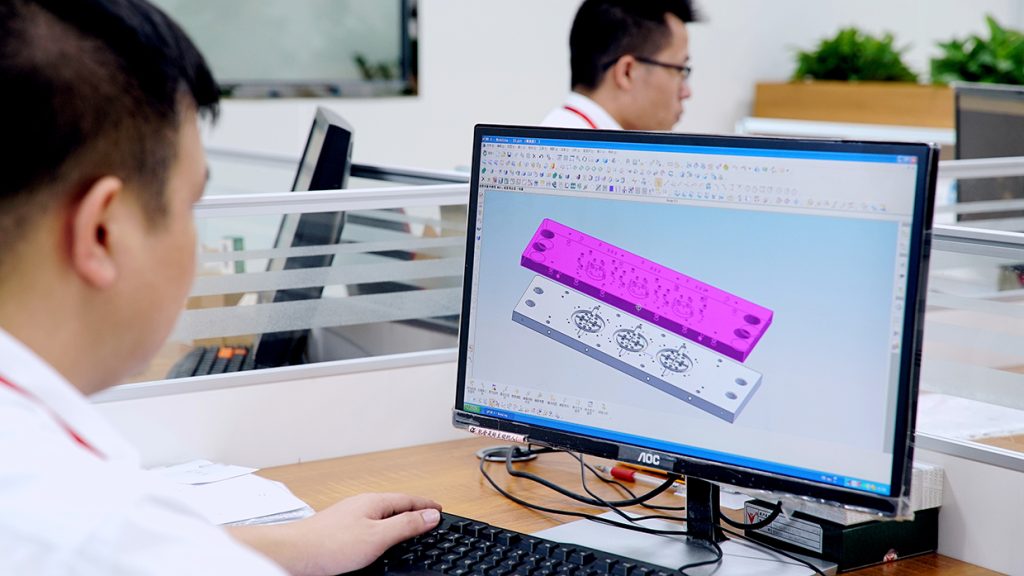
Digital validation is the cornerstone of our die component fabrication strategy. We utilize advanced software platforms, including UG, PRO-E, CAD, CAE, and CAM, to build fully parametric 3D models to simulate actual manufacturing and forming conditions.
These tools enable us to detect potential problems before production begins, such as interference fits, insufficient material flow, springback deformation, or insufficient forming radius. CAE analysis provides in-depth insights into stress distribution and deformation behavior, which is particularly important when forming stainless steel, copper alloys, high-carbon steel, titanium, or Inconel alloys. Furthermore, CAM integration ensures that toolpaths are optimized for accuracy and repeatability. This digital-first approach enhances mold matching performance. It provides precise alignment of upper and lower die components during production trials, reducing setup time and stabilizing stamping performance in high-volume production.
Material Selection Strategy in Die Components Fabrication
Material selection plays a decisive role in die matching stability and die life. In die part manufacturing, inappropriate material combinations can lead to premature wear, chipping, scratches, or deformation under load.
Chaoyang evaluates material compatibility based on stamping application requirements, expected throughput, forming forces, and surface finish requirements. For example:
- High-carbon tool steel offers excellent wear resistance and is suitable for long-term stamping.
- Powder metallurgy alloys offer superior microstructure uniformity.
- Carbide inserts enhance the performance of stainless steel in abrasive forming.
- Special alloys are selected when stamping titanium or Inconel alloy parts.
Furthermore, we consider the coefficient of thermal expansion to ensure dimensional stability of the material at different temperatures. Material selection is always closely integrated with tolerance planning and heat treatment sequence.
Precision Engineering and Manufacturing Capabilities in Die Components Fabrication
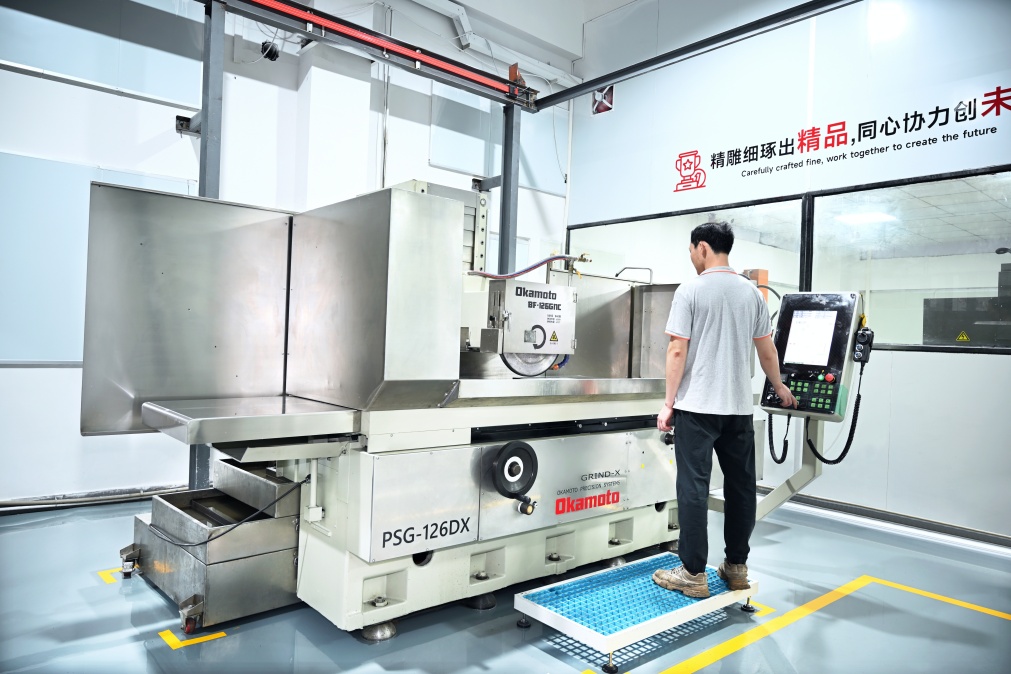
Precision machining determines the functional quality of die components. Chaoyang Company possesses core capabilities covering the entire engineering process of stamping dies, ensuring unparalleled dimensional control and surface finish.
Our available machining technologies include:
- Jig grinding for achieving ultra-fine contour accuracy.
- Contour grinding for precision machining of complex shapes
- CNC milling for structural geometry machining
- Wire EDM for machining complex internal contours
- Precision surface grinding for controlling flatness and parallelism.
These technologies enable us to control the tolerances of punches, dies, and guide systems to within ±1μm in a controlled production environment. By combining machining process planning with DFM-based design, we avoid excessive post-machining corrections and minimize manual assembly during die assembly.
Optimizing Die Fit through Precision Assembly and Verification
Die fit is the link between design theory and production practice. Even perfectly machined die components require systematic alignment and assembly strategies to ensure optimal performance.
Chaoyang employs a structured assembly process, supplemented by coordinate measuring systems and precision alignment tools. Each guide post, bushing, punch holder, and die insert is inspected before final integration to ensure compliance with design specifications. Furthermore, we simulate stamping conditions during trial molding to verify load distribution, clearance control, and peel balance. For stainless steel and high-strength alloys, we fine-tune clearances to prevent burr formation and excessive tool wear. Simultaneously, we monitor thermal expansion behavior during continuous operation, especially when molding titanium and Inconel alloys. By predicting material springback and die deformation, we can improve die matching accuracy early in the validation phase.
Die Components Fabrication Through Precision Manufacturing Processes
Chaoyang uses a collaborative DFM (Design for Manufacturing) approach to ensure that the design of each die component not only focuses on dimensional accuracy but also on manufacturability, durability, and long-term production stability. By utilizing advanced 3D modeling platforms such as UG, PRO-E, CAD, CAE, and CAM, we are able to identify and eliminate potential risks in the early design stages of die components fabrication. Meanwhile, we possess comprehensive machining capabilities, including JG, PG, CNC milling, wire EDM, and precision surface grinding, enabling us to consistently achieve tolerances of ±1μm. This combination of digital verification and precision mold engineering ensures superior mold-fitting performance across a wide range of materials, from stainless steel and copper alloys to titanium and Inconel.