Chaoyang blog

Precision Tools
Chaoyang blog

Precision Tools That Power High-Performance Stamping Die

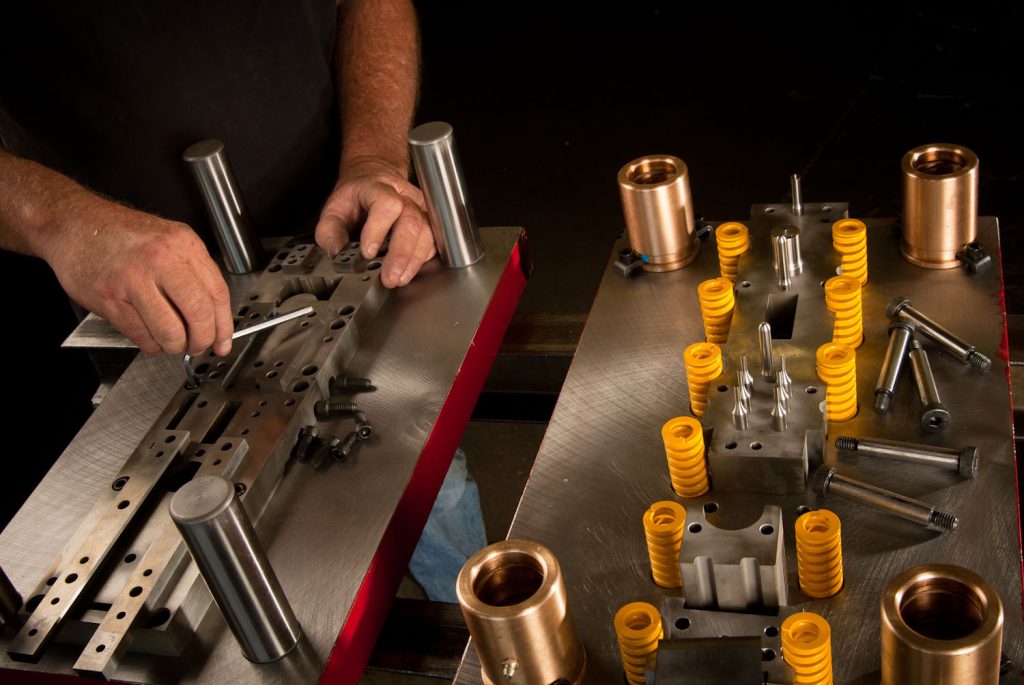
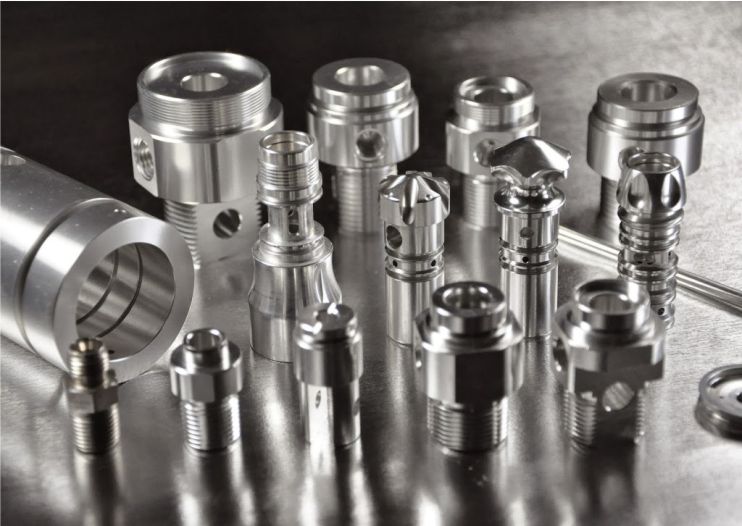
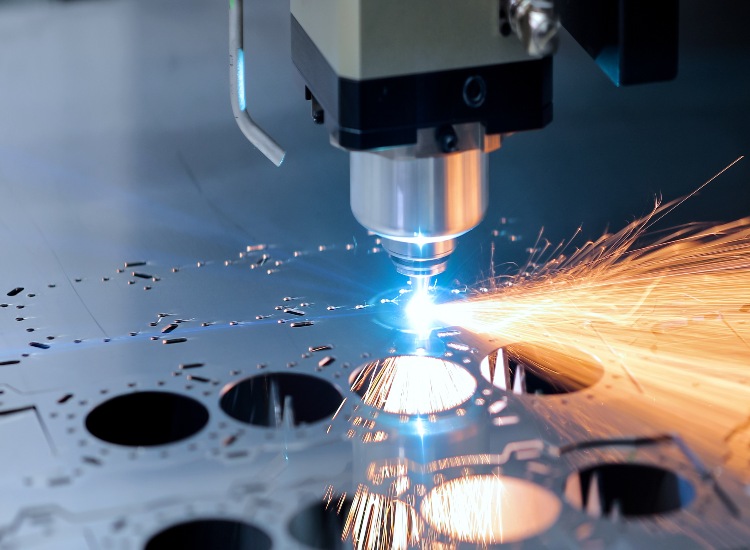
High-performance stamping dies in all electronics manufacturing are almost inseparable from precision tools, which ensure that every piece of sheet metal or strip of metal is formed with micron-level accuracy. Without them, high-volume production would be rife with errors, inefficiencies, and costly waste. Whether you are producing smartphone connectors or electric vehicle terminals, tooling quality has a direct impact on yields. Tool Materials Affect Base Performance The base material of a tool is foundational to its performance. Most Precision Tools for stamping dies use high-speed steel (HSS) or tungsten carbide, each offering distinct benefits. HSS provides affordability and versatility, while carbide delivers superior wear resistance, making it ideal for high-output environments. Your material choice affects tool life, maintenance cycles, and, ultimately, part quality. Furthermore, the heat treatment of tool steel affects hardness and toughness. A well-heated tool holds its edge longer and resists cracking under pressure. In high-volume electronics production, that durability can make or break your lead times. Therefore, choosing the right material isn’t just a technical decision—it’s a strategic business decision.   Advanced Manufacturing Techniques for Precision Precision Tools owes its accuracy to advanced machining techniques. CNC grinding, wire EDM (Electrical Discharge Machining), and laser cutting allow for intricate, repeatable geometries. These processes provide tolerances as tight as ±2 microns, which is critical for small, complex electronic parts. As electronics become smaller, toolmakers must adapt to increasingly finer machinery and controls. Besides fabrication, metrology ensures each tool meets its design specs. Optical comparators, coordinate measuring machines (CMMs), and laser scanning verify dimensions before tools are sent to the press. This extra step keeps tool failures low and uptime high—a necessity when every second counts in mass production. Surface Treatments for Extended Tool Life A good tool becomes great with the proper surface treatment. Coatings such as titanium nitride (TiN), titanium carbonitride (TiCN), or diamond-like carbon (DLC) enhance hardness and reduce friction. These treatments keep tools cooler, resist galling, and significantly extend service life. For OEMs, fewer tool changes mean lower costs and higher throughput. Additionally, polished surfaces improve material flow and prevent scrap buildup. When metal flows smoothly, die wear is reduced, and parts exit with cleaner edges. This minor enhancement can have a significant impact on overall efficiency, particularly in high-speed progressive stamping setups. The Role of Tight Tolerances and Alignment Stamping dies operate in high-speed environments, where even a slight misalignment can lead to catastrophic failures. Precision Tool maintains tight tolerances, ensuring upper and lower die components align perfectly. Accurate alignment reduces part defects and prevents premature wear, thereby minimizing downtime. Alignment also affects the longevity of die components. Misaligned punches and dies create uneven stress that leads to cracks and fatigue. Investing in precise alignment tooling and checking fixtures pays dividends over time, keeping operations smoother and reducing the need for emergency tool replacements. Modular Tooling Systems for Faster Changeovers Modular tooling systems increase flexibility and decrease setup time. These systems allow manufacturers to swap punches, dies, and guide components without re-machining or recalibrating entire setups. The precision of each module ensures consistency across different batches and product types. Moreover, modularity supports quick adaptation to design updates or new SKUs, which is essential in fast-paced electronics markets. Precision Tools in modular formats empower stamping facilities to scale efficiently and reduce downtime during product transitions. Inspection and Maintenance Protocols No tooling strategy is complete without a solid inspection routine. Precision Tools require periodic checks for wear, chipping, and dimensional drift. Automated inspection stations equipped with vision systems or laser micrometers can detect issues early, preventing defective parts from entering downstream processes. Proactive maintenance extends tool life and maintains part accuracy. Sharpening schedules, lubrication routines, and component replacements must be strictly followed. High-volume electronics production can’t afford surprises, so consistent inspection protocols are crucial for staying ahead. Digital Integration and Tool Management Software Today’s toolmakers benefit from digital platforms that track wear, usage, and calibration status to optimize their operations. Tool management software creates a digital twin of every Precision Tool, logging its history and predicting maintenance needs. This data-driven approach reduces unscheduled downtime and enhances forecasting accuracy. Additionally, integration with ERP and MES systems provides real-time visibility into tooling availability and performance. With digital tracking, operations teams can proactively coordinate tool replacements, ensuring stamping lines remain productive and free from bottlenecks. Precision Tools Drive Stamping Success High-volume electronics production requires precision tools. Whether you’re producing connectors, heat sinks, or housings, your production results are entirely dependent on the precision of your tools. While high-quality tools require a larger upfront investment, the long-term benefits are unquestionable: extended tool life, micron-level precision, and optimized production efficiency.

metal dies
Chaoyang blog

The Role of Metal Dies in High-Volume Electronics Production

Metal dies play a critical role in achieving efficiency, precision, and repeatability in high-volume electronics manufacturing. From producing microminiature connectors to complex shielding components, metal dies form the foundation for scalable production. Precision and Repeatability in Stamping Processes Metal Dies allow manufacturers to replicate intricate parts with micrometre-level precision. This consistency is crucial when producing connectors, terminals, and enclosures for devices such as smartphones and wearables. By minimising variability, metal dies help ensure product compatibility and functionality. Repeatability also reduces waste. Each stroke of a high-speed press delivers identical results, making it possible to meet massive output quotas without compromising quality. With fewer defects and consistent part dimensions, downstream processes like assembly and quality inspection become faster and more reliable. Customisation for Specific Applications Not all electronic components are created equal, which is why die customisation matters. Metal Dies can be engineered to accommodate special features, such as multiple bend angles or tiny embossments. This flexibility enables designers to innovate without being constrained by tooling limitations. Additionally, custom dies are used to improve integration between mechanical and electrical systems. When dies are tailored to specific PCBs or housing components, it leads to better fit, function, and overall product integrity. In turn, OEMs gain a competitive edge by offering more compact and advanced devices. Material Selection and Die Durability The performance depends heavily on material selection. Tool steels, such as SKD11 or DC53, offer wear resistance and toughness, which are essential for high-volume production. Coatings like TiN or DLC can further extend die life, reduce maintenance, and improve part surface finish. Choosing the right materials also affects the total cost of ownership. While premium alloys and coatings may increase upfront costs, they often result in lower downtime and fewer replacements. In fast-paced electronics production, this trade-off is well worth it. Speed and Automation in High-Volume Manufacturing Metal Dies are designed for speed. When paired with servo-driven presses or automated feeding systems, they enable cycle times of milliseconds per part. This is crucial in electronics markets, where time-to-market can define success. Moreover, dies that support progressive stamping can combine multiple forming actions in a single press stroke. This reduces handling, simplifies logistics, and maximises throughput—all without sacrificing quality. Automation-ready dies are now standard in leading production environments. Quality Assurance and Tolerance Control Maintaining quality at scale requires rigorous control of tolerance. Metal Die delivers predictable results, which simplifies statistical process control and reduces the need for frequent inspections. This boosts yield and keeps production lines running smoothly. Innovative die systems now integrate sensors to monitor wear, misalignment, and pressure variations in real time. These features help detect issues before they become defects, further improving reliability. The result is a proactive approach to quality that benefits the entire supply chain. Tooling Maintenance and Lifecycle Management Even the best require regular maintenance. Preventive maintenance programs—such as sharpening, cleaning, and recoating—ensure that dies continue to perform optimally. Skipping maintenance risks premature wear, part defects, and costly downtime. Lifecycle management also matters. Manufacturers must track tool usage, cycle counts, and performance trends to ensure optimal utilisation. This data supports timely refurbishment or replacement, avoiding unexpected failures. A disciplined approach to die maintenance protects both production efficiency and product quality. Integrating Metal Die into Modern Production Lines Integration is key. Metal Dies must align with automated handling, inspection, and packaging systems to streamline production. Misalignment or delays in one stage can disrupt the entire line. Therefore, dies should be compatible with modern production technologies. Additionally, simulation and CAD modelling now help predict die behaviour under real-world conditions. This reduces trial-and-error in tooling development and shortens lead times. When well-integrated, dies act as an enabler, not a bottleneck, in production scalability. Why Metal Dies Remain Indispensable Despite the significant advances in additive manufacturing and flexible electronics, metal dies remain at the heart of high-volume electronics production. Their speed, precision, and repeatability are irreplaceable. If designed and maintained correctly, they can generate significant value in high-volume electronic component manufacturing.

Progressive Die
Chaoyang blog

Which is best for your application, fine blanking or progressive die?

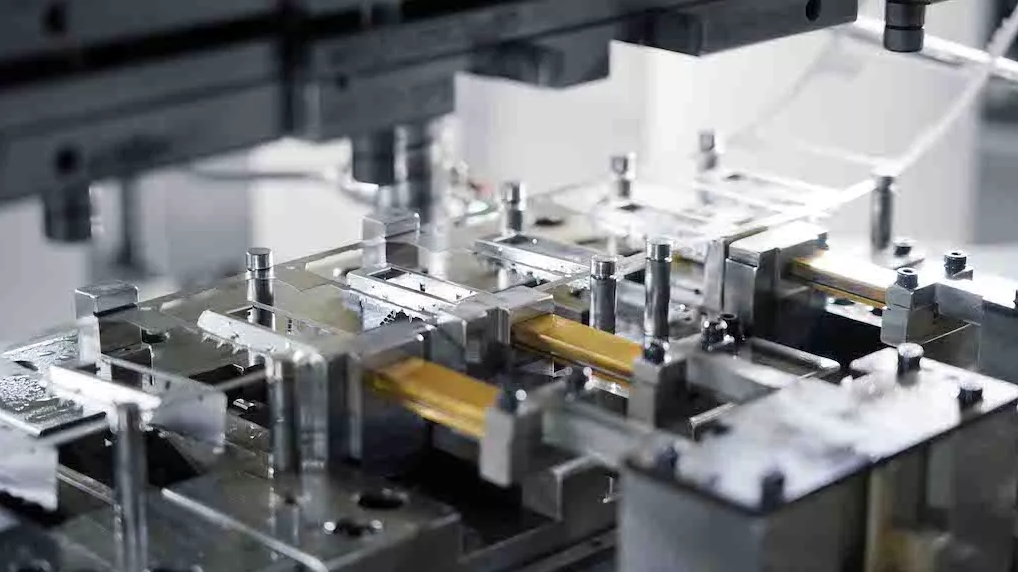
In the world of precision metal stamping, the choice between fine blanking and progressive die can have a significant impact on product quality and production efficiency. Although both are used to manufacture complex metal parts, their mechanisms, output quality, die complexity, and cost impact differ. In actual production, the choice between them often leaves engineers torn. Both technologies have proven their value in mass-production environments; however, choosing the wrong technology may result in higher costs, increased scrap rates, or unacceptable tolerances. How the Two Processes Work Fine blanking and progressive die stamping rely on different mechanical principles. Fine blanking uses triple-action presses that apply simultaneous forces to minimise part distortion. A V-ring holds the material in place while a counter punch eliminates burrs. The result is a clean, straight edge. In contrast, a progressive die operates within a single stamping press. It uses a strip of metal fed through sequential stations, each performing a step in the forming process. Punching, bending, and coining are all possible in one continuous movement. This setup allows high-speed output but may result in more visible burrs or taper on part edges. Tolerances and Edge Quality When tight tolerances and smooth edges are non-negotiable, fine blanking often proves to be the superior choice. It produces parts with edge characteristics similar to machined surfaces. That makes it ideal for critical applications, such as gears, seatbelt components, and parts of the anti-lock braking system (ABS). However, a well-designed progressive die can also deliver precision. Especially with added finishing steps or additional stations, a progressive die can achieve impressive consistency. The trade-off lies in edge sharpness and potential secondary deburring. For non-safety-critical components, progressive stamping might offer the perfect balance of cost and quality. Material and Thickness Considerations Fine blanking is most effective with softer materials and medium thickness ranges, typically up to 10 mm in thickness. Harder metals can increase tooling wear and reduce die life. Additionally, the materials used must be ductile enough to avoid cracking under triple-action forces. Progressive die stamping, on the other hand, accommodates a broader range of materials. From thin foil to more complex alloys, this process offers greater versatility. It’s also easier to integrate coatings or laminations, which may not perform well under the delicate blanking process. Volume, Cost, and Tooling Investment Tooling costs vary significantly between the two methods. Fine blanking dies are more complex and expensive to manufacture. They’re often reserved for high-volume runs where edge quality is paramount. However, the per-part cost may decrease with scale, making the upfront investment worthwhile. Progressive die tooling tends to cost less and offers faster lead times. It’s also more adaptable to product changes, especially in early production stages. For projects with lower volumes or future design variability, progressive die tooling is a financially sound option. Part Complexity and Design Flexibility If your component has undercuts, precise functional surfaces, or needs coining, fine blanking delivers superior dimensional control. It reduces the need for secondary operations and ensures consistent flatness. The downside is limited geometry options compared to progressive die stamping. Progressive dies excel when parts require multiple forming actions or integrated features, such as tabs, lances, or embossing. Designers can embed various functionalities into a single tool path. That opens up creative freedom while keeping part of the production within a lean framework. Production Speed and Cycle Time Fine blanking is slower by nature. The press cycles must accommodate counterpressure and precise material control. Typical speeds range from 20 to 100 strokes per minute. While not slow per se, it’s significantly less rapid than progressive systems. In contrast, progressive dies thrive at high-speed operation. It’s not unusual to see 300–800 strokes per minute, especially in automated production lines. This makes it ideal for consumer electronics, automotive clips, or any part requiring volume over micro-precision. Secondary Operations and Post-Processing Fine blanking usually eliminates the need for secondary machining, deburring, or grinding. Its precision minimises downstream work, saving both time and cost in finishing departments. Progressive dies may necessitate finishing, depending on the material and edge quality. However, many systems now integrate brushing, in-die tapping, or marking stations. This evolution narrows the gap and makes progressive stamping increasingly self-contained. Choosing fineblanking and a progressive die based on the application When choosing between fine blanking and progressive dies, it ultimately comes down to your application priorities. If you are looking for high-edge quality, structural integrity, and tight tolerances, the fine blanking die is more suitable for you. For high-volume, cost-sensitive production with acceptable tolerances, the progressive die is still the best choice.

Stamping Die
Chaoyang blog

What Makes a Good Stamping Die for Type-C Connector Parts?

Type-C connectors are one of the most widely used interfaces in today’s electronic products. The compact size and versatility make it popular among manufacturers across various industries. However, it has a delicate internal structure, numerous pins, a dense layout, and challenging welding. Additionally, the stamping die tolerances in the manufacturing process are extremely strict. If the stamping dies accuracy does not reach microns, misalignment, part failure, and a significant amount of time and money will be wasted. Precision requirements for Type-C geometry Type-C connectors are compact, typically with wall thicknesses under 0.2 mm. Therefore, the stamping die must consistently maintain tolerances in the micron range. Standard deviation in dimensions can lead to functional failures, including poor mating, misalignment, and unstable data transmission. To achieve this, the die must be designed using high-precision machining and advanced CAD/CAM systems. Every cavity, edge, and profile must be optimized for minimal wear and repeatability. The correct gap between punch and die is crucial—too tight, and you risk rapid wear; too loose, and you compromise accuracy. Material selection for die longevity Not all die steels are created equal, especially when dealing with stainless steel or copper alloy sheets commonly used in USB-C components. Tool steels, such as DC53 or ASP23, provide the hardness and toughness necessary to withstand millions of cycles. Additionally, coatings such as TiCN or DLC can significantly reduce friction and wear, thereby extending the lifespan of the die. Choosing the right material and coating combination means fewer shutdowns and lower long-term costs. A reliable stamping die starts with intelligent material selection. Die design for burr-free edges Burrs are the enemy of electrical contacts. For Type-C parts, even the smallest burr can interfere with signal integrity or assembly. That’s why the die must be engineered to minimize burr formation during blanking and forming. This involves optimizing the shear angle, punch sharpness, and clearance between mating surfaces. Multi-stage progressive dies can also be designed to include a deburring or coining stage, ensuring parts exit the press with a clean finish. Tight strip layout and material utilization The layout of the strip—the metal sheet as it passes through the die—is a key element in both cost and quality. For small components, such as Type-C contacts, even a 0.1 mm misalignment can cause reject rates to spike. High-quality stamping dies utilize precise pilot pins, guides, and sensors to ensure alignment. Moreover, optimizing the layout for material usage can reduce scrap, especially when working with expensive materials like beryllium copper. Less waste means higher profitability. Durability in high-volume production USB-C connectors are produced in massive quantities, so the die must withstand high-speed, high-cycle operation. This places stress on every part of the die, including guides, punches, springs, and strippers. Advanced die builders use hardened components and precision-ground surfaces to ensure long-term durability. Regular maintenance cycles can be built into the die’s design to minimize downtime. A stamping die built for endurance supports uninterrupted production lines. Integration with automation systems In modern facilities, diseases rarely operate in isolation. Instead, they form part of fully automated stamping lines. For USB-C components, automation ensures consistency and reduces labor costs. A high-quality stamping die includes provisions for sensors, ejectors, and automatic feeding systems. These elements ensure smooth part ejection, real-time quality checks, and alignment correction. Integrated automation reduces errors and boosts efficiency. Quality control and stamping dies validation Building the die is only half the equation—validating its performance is equally important. Manufacturers must perform pre-article inspections, capability studies, and pilot runs to ensure that the stamping die meets performance criteria. Inspection methods, such as vision systems or laser measurement tools, help catch defects before full-scale production begins. Documentation and revision control also play a role. A validated stamping die provides confidence and data-backed assurance. Choosing the proper stamping die facilitates the manufacturing of USB-C parts In USB-C production, it is crucial to see the precision stamping die. It determines whether the output is smooth because even a slight deviation may cause part scrapping and waste of resources. Choosing the right material and design, combined with strict quality control, can help maintain stable production and minimize waste.

Chaoyang blog

Upcoming Participation: INTERMOLD 2025 Tokyo

April 2025 | Tokyo, Japan We’re excited to announce our participation in INTERMOLD 2025, Asia’s premier exhibition for mold technology and precision manufacturing. We look forward to engaging with global industry leaders and showcasing our expertise in high-precision stamping dies through collaborative discussions. This event aligns with our strategic focus on addressing Japan’s growing demand for advanced solutions in automotive electronics, micro-components, and ultra-thin material stamping. Visitors to the exhibition can learn about our latest innovations in energy-efficient die manufacturing and multi-stage forming systems designed to meet stringent quality standards in high-volume production. Stay tuned for updates on our virtual presentations and downloadable technical resources during the event. We invite partners and clients to connect with us remotely to explore how our precision tooling solutions can optimize your manufacturing processes.

Chaoyang blog

EuroBLECH 2024 Hannover Exhibition

November 2024 | Hannover, Germany   We proudly participated in Euroblech 2024, the world’s leading trade fair for sheet metal working technology, held in Hannover, Germany. As an exhibitor, we showcased our latest advancements in precision stamping die solutions, including high-speed progressive dies, multi-stage forming technologies, and AI-driven quality control systems. The event provided an exceptional platform to connect with global industry leaders, share expertise in precision tooling, and explore emerging trends in the automotive, electronics, and industrial manufacturing sectors. Our team engaged with clients across Europe and established promising partnerships, reinforcing our commitment to delivering cutting-edge, customized die solutions for complex manufacturing challenges.

Chaoyang blog

What device is used for CNC gong processing?

The effect will be better if precision equipment is used for processing. How can this be said? First, the processing effect is much faster, and then the processing power is much faster. In addition, smart devices are constantly increasing, and automation is becoming more and more obvious. Therefore, the requirements for skills in CNC gong processing and milling machine processing are getting higher and higher. CNC gong processing is to process products, use computers with digital control systems, and set up more precise processing and production. Compared with traditional mechanical processing, the power or quality of modern CNC gong processing is better than traditional manual prototypes. With the continuous development of computer technology, processing equipment can process more parts at the same time. CNC equipment now has a great integration advantage than before and has become the mainstream processing method now. The advantage of CNC prototype is that it can accurately reflect the information expressed in the drawing, and the surface quality of CNC prototype is high, especially after the surface spraying and silk screen printing are completed, it is even more dazzling than the products produced after the mold is opened. Therefore, it is not unreasonable that more and more people choose CNC prototype processing and production. 1. The precision and surface roughness of CNC prototype parts: If the tolerance requirement is 0.05mm, the requirements for both processing equipment and prototype masters are relatively high, and the cost will be much higher; 2. If the material of the CNC prototype parts is difficult to process, such as stainless steel, the material hardness is high, and tungsten steel hardened tools are required, and the CNC gong needs to be made by Taiwan or Japanese machines. Of course, the cost will be higher than that of general materials. 3. The structure and size of CNC prototype parts: If the product structure is messy, the processing cost will be much higher; if the overall size of the product is large or the appearance is a curved surface, the processing cost will also increase a lot.

precisionToolingRepair
Chaoyang blog

How to improve the development of precision stamping die processing in China?

Molds are basic process equipment with large usage and wide influence in the manufacturing industry. They are known as the “mother of industry” and “crown industry” and are high-tech intensive industries. Stamping die-a special process equipment that processes materials (metal or non-metal) into parts (or semi-finished products) in cold stamping is called cold stamping die (commonly known as cold stamping die). Stamping-is a pressure processing method that uses a mold installed on a press to apply pressure to the material at room temperature to separate or plastically deform it, thereby obtaining the required parts. Stamping dies are indispensable process equipment for stamping production and are technology-intensive products. The quality, production efficiency and production cost of stamping parts are directly related to mold design and manufacturing. The level of mold design and manufacturing technology is one of the important indicators of a country’s product manufacturing level, and largely determines the quality, efficiency and new product development capabilities of the product. At present, multi-station progressive dies with step accuracy and forming accuracy of about 2μm can be produced. Small precision hardware continuous molds belong to high-end molds in the mold industry, with the characteristics of complex structure, high precision of parts processing, fast stamping speed and long service life. Small hardware high-speed continuous stamping molds are widely used in the electronics industry, and are also the most important tools for developing and producing structural parts of emerging products such as mobile phones and other mobile communication terminals. In the “Eleventh Five-Year Plan” of the mold industry, precision stamping molds, especially small precision hardware high-speed continuous stamping molds closely related to the electronic information industry, are listed as development priorities. To produce high-precision and high-stability stamping parts, it is necessary to improve the technical level of stamping molds. With the development of microelectronics technology, the integration of consumer terminals such as mobile phones and digital products is getting higher and higher, while their size and weight are decreasing significantly, requiring the various components inside them to be smaller and smaller. For example, the connectors supporting mobile phones and digital products are also developing towards ultra-miniaturization and thinness. The lead spacing of the connector has been reduced to 0.5mm, 0.4mm, and 0.3mm, which also promotes the development of precision mold technology. (1) Vigorously cultivate talents in mold design and processing; (2) Vigorously improve the level of domestic mold processing equipment; (3) Vigorously improve the quality of domestic mold materials; (4) Support domestic enterprises with good mold foundation, and gradually produce a group of leading mold enterprises close to international standards.

Chaoyang blog

New Developments in Precision Mold Processing Fuel Industry Growth

With the development of the domestic hardware stamping parts industry, competition from various provinces has become increasingly fierce. Disorderly competition in the hardware stamping parts industry has begun to appear, and the disadvantages of low cost, low product structure and low technical content of hardware have become increasingly apparent. At present, from a general point of view, my country can only be called a major producer of hardware stamping parts processing molds, but not a strong producer. There is still a gap of 10 to 15 years between its products and those of developed countries. At present, it is still dominated by medium and low-end products. In recent years, my country’s mold industry will continue to grow rapidly while showing the following characteristics: products continue to develop in the direction of larger, more precise, complex and economical, the technical content will continue to increase, the manufacturing cycle will continue to shorten, and the production of hardware stamping parts processing molds will continue to develop in the direction of informatization, digitization, refinement, high speed and automation. Enterprises will further enhance their comprehensive strength and core competitiveness in all aspects. The hardness test of metal stamping parts adopts Rockwell hardness tester. Small stamping parts with complex shapes can be used to test the surface that is difficult to test on ordinary desktop Rockwell hardness tester. Stamping parts processing includes punching, bending, drawing, forming, finishing and other processes. The materials processed by stamping parts are mainly hot-rolled or cold-rolled (mainly cold-rolled) metal strip materials, such as carbon plate, alloy steel plate, spring steel plate, galvanized plate, tin plate, stainless steel plate, copper and copper alloy plate, aluminum and aluminum alloy plate, etc. Portable surface Rockwell hardness tester is very suitable for testing the hardness of these stamping parts. Alloy stamping parts are the most commonly used parts in metal processing and mechanical manufacturing. Stamping parts processing is a processing method that uses molds to separate or form metal strips. Its application range is very wide. The main purpose of hardness testing of stamping materials is to determine whether the annealing degree of the purchased metal sheet is suitable for the subsequent stamping processing. Different types of stamping processing require steels of different hardness levels. Aluminum alloy plates used for stamping processing can be tested with a Webster hardness tester. When the material thickness is greater than 13mm, a Barcol hardness tester can be used. Pure Lu plates or low-hardness aluminum alloy plates should use a Barcol hardness tester. In the stamping industry, stampings are sometimes also called sheet forming, but there is a slight difference. The so-called sheet forming refers to the use of sheets, thin-walled tubes, thin-shaped materials, etc. as raw materials. The forming method of plastic processing is collectively referred to as sheet forming. At this time, the deformation in the direction of the thick plate is generally not considered.

Chaoyang blog

Is the processing process of precision stamping dies strict?

The processing procedures of the main working parts of precision metal stamping dies, namely the convex and concave dies, do not have high technical requirements for operation and can form more complex cavities at one time. In recent years, Switzerland, Japan and other countries have conducted in-depth research and major improvements on electrical processing equipment, and have manufactured fully functional high-precision NC and CNC wire cutting machines with processing accuracy of ±0.005~ 0.001mm, or even smaller. The processing surface roughness Ra value can reach 0.4μm. The precision metal stamping dies produced by Jingzhong Mould have a blanking size accurate to +/-0.002, and the bending size is within +/-0.08mm. The first step of metal stamping processing dies is to cut the material. At the very least, the blank must be cut or sawed off from the raw material of the die steel, and then it is rough processing. The surface and size of the newly cut blank are relatively poor, so it needs to be put on a grinder for rough grinding. At this time, it belongs to rough processing, so the size requirements are not high, and generally a tolerance of 50 wires is enough. After rough processing, heat treatment is required. Generally, heat treatment is processed by a special heat treatment plant. There is not much to introduce about this. After heat treatment, fine processing is required. Generally, it is first fine-grinded on a grinder. At this time, the size requirements are more stringent. Generally, the accuracy should be around 0.01. Of course, this accuracy is not absolute. The specific accuracy requirements should also refer to the complexity and precision of the metal stamping parts that the metal stamping mold needs to process. After the grinding machine is completed, the previous design drawings are installed for processing. Generally, the wire holes are threaded first, and then the required size and shape are cut out according to the drawings, and then the milling machine, CNC, etc. are used as appropriate. This specific also depends on the complexity of the metal stamping parts.

Scroll to Top