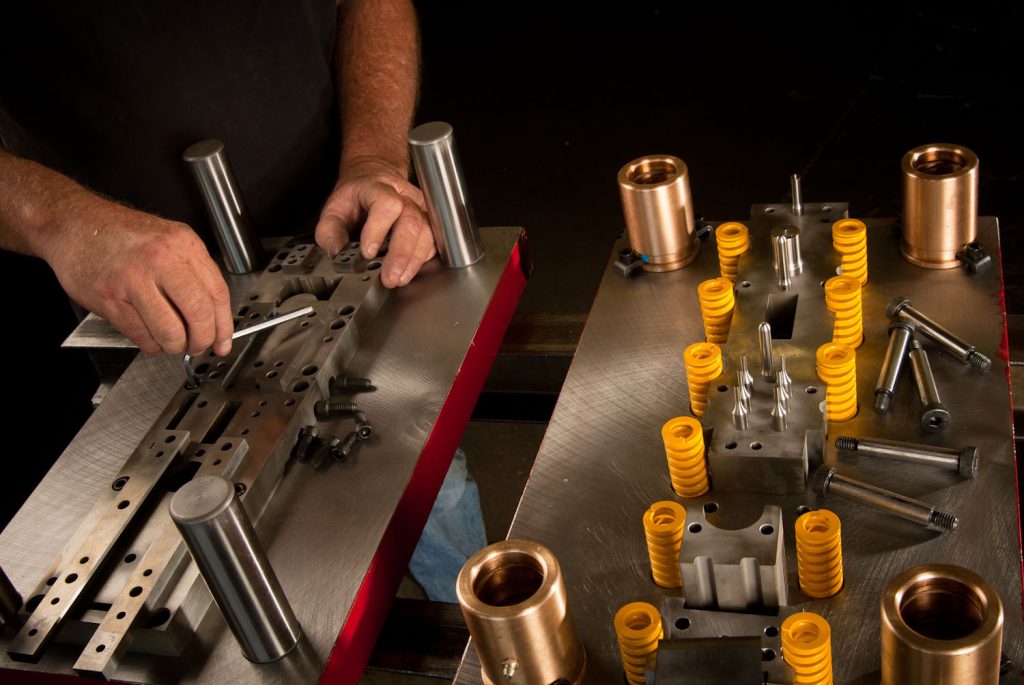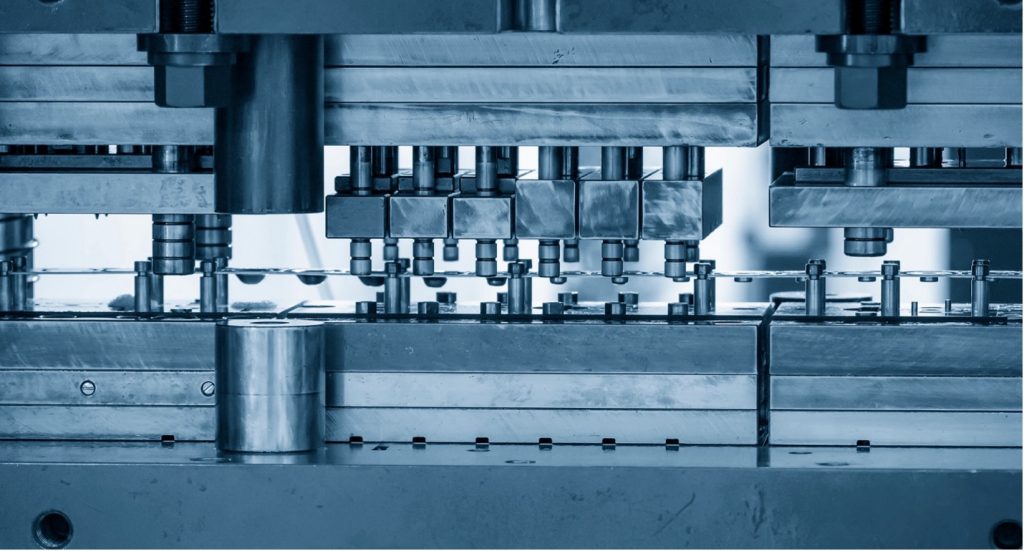
progressive die

Progressive Die
Chaoyang blog

Sheet Metal Fabrication vs. Progressive Die Stamping: Core Differences and Application Scenarios

Sheet metal fabrication and progressive die stamping support many industries that need reliable metal parts. Both methods shape metals effectively. However, they follow different workflows, cost structures, and quality expectations. Understanding these differences helps engineers and buyers choose the proper process for specific production volumes, tolerance requirements, and lead-time goals. Companies that use Progressive Die systems often pursue consistent mass production, while sheet metal fabrication supports flexible, low- to mid-volume demand. Process Overview and Key Workflows Sheet metal fabrication uses several individual processes. These include laser cutting, bending, forming, drilling, tapping, and welding. Operators run each step separately. This workflow creates flexibility. But it also increases lead time and manual intervention. Progressive Die stamping performs multiple operations in a single automated stroke. A strip moves through stations. Each station forms, bends, or punches a feature. The part leaves the die almost complete. The method reduces handling and boosts speed. Progressive Die lines also deliver higher repeatability and fewer human errors. Differences in Production Speed and Efficiency Sheet metal fabrication is suitable for projects with mixed part types. Operators switch setups quickly. But each step requires manual input, which slows mass production. A typical fabrication shop can complete hundreds of parts daily. Progressive Die stamping reaches far higher volumes. A single die can produce thousands of parts per hour, depending on complexity. This speed makes it ideal for automotive terminals, connector components, electronics brackets, and hardware pieces. The continuous feed system minimizes cycle time and stabilizes output. Cost Structures and Investment Considerations Sheet metal fabrication has lower initial tooling costs. Many projects only require laser-cut blanks and standard press brakes. This makes fabrication suitable for prototypes and low volumes; however, the unit price increases as production scales, as each step consumes labor and machine time. Progressive Die stamping needs significant upfront investment. A precision-built Progressive Die tool may cost several thousand to tens of thousands of dollars. But once launched, the unit cost drops dramatically. High-volume orders justify this cost. Large manufacturing companies treat tooling as a long-term asset. Studies show that Progressive Die users often achieve 30–60% cost reduction in large-scale operations. Differences in Tolerances and Quality Stability Fabrication tolerances vary with the equipment and the operator’s skill. Laser cutting offers good accuracy, but secondary steps introduce variation. Consistency may drift as bending angles accumulate errors. Progressive Die stamping maintains tight tolerances. Precision-ground die inserts control every dimension. Many stamping dies operate within ±0.02 mm accuracy, depending on the steel grade and press stability. This repeatability is crucial for connectors, terminals, micro-formed parts, and high-performance assemblies. Companies that rely on Progressive Die tools benefit from stable quality over millions of cycles. Applications Best Suited for Each Method Sheet metal fabrication is ideal for products that require design flexibility. Control cabinets, brackets, housings, enclosures, and prototypes often use fabrication. These items change frequently during development. Short lead times and low tool costs support project agility. Progressive Dies stamping excels in mass production. Manufacturers choose this method for terminals, lead frames, electronic shields, battery components, and minor structural parts. When the design stabilizes and demand increases, Progressive Die stamping becomes the best option. High-speed presses and automatic feeding systems allow consistent performance across long production runs. How to Choose the Right Method for Your Project Engineers should evaluate volume, precision, complexity, and long-term cost. Low-volume orders benefit from sheet metal fabrication. The flexibility helps companies test concepts or run pilot builds. High-volume projects should consider using Progressive Die stamping. This approach reduces per-unit cost, improves dimensional stability, and shortens cycle times. Buyers also look at material requirements. Harder materials and complex forms may need a robust die with form stations, pilots, and stripper plates. Meanwhile, fabricated items often use softer materials that handle bending well. How Progressive Die Stamping and Fabrication Impact Production Efficiency Choosing between sheet metal fabrication and Progressive Die stamping depends on your project goals. Both methods offer strong advantages. Fabrication supports flexibility, while stamping ensures speed and consistency. Understanding these core differences helps teams balance performance, cost, and quality across different product stages.
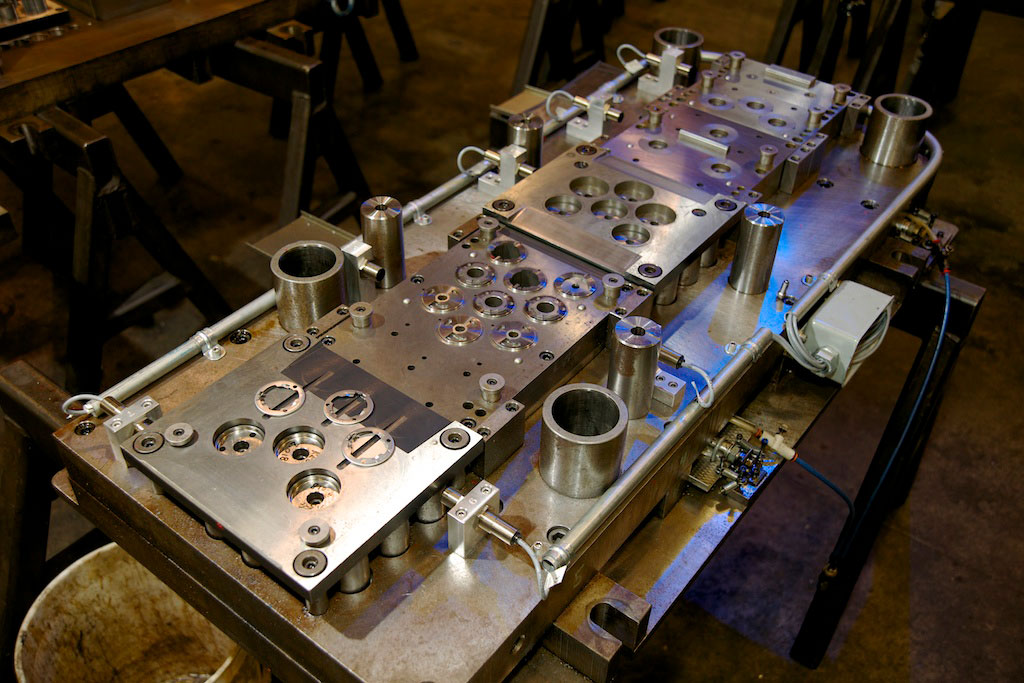
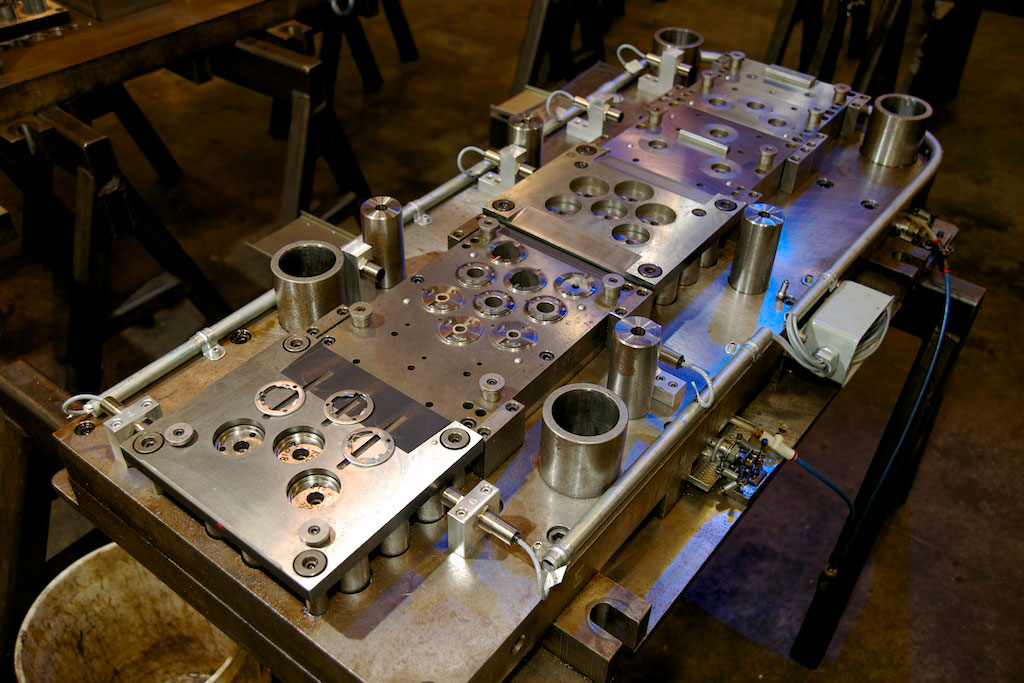
progressive-die
Uncategorized

How progressive die technology supports electric vehicle production?

Electric vehicle (EV) manufacturing depends on precision and efficiency. To meet growing demand, automakers rely on advanced stamping methods. Among them, progressive die technology has become essential. It allows complex parts to be produced at scale, while maintaining the accuracy required for electric vehicle components. Meeting EV Demand with Precision EV production continues to rise globally, and the supply chain must keep pace. Automakers face pressure to manufacture battery housings, motor cores, and lightweight structural components at scale. Progressive die technology provides consistent part accuracy across thousands of cycles. This repeatability ensures that every component meets tight design tolerances. As a result, EV manufacturers can reduce waste, improve quality, and avoid costly rework through the use of a progressive die. Efficiency Across Mass Production EV factories operate under strict timelines. Each second saved per cycle adds up to significant output gains. Progressive dies allow multiple forming steps, such as cutting, bending, and coining, to occur in one continuous press stroke. This integration minimizes downtime between processes. It also reduces manual handling, which improves worker safety. By streamlining production, progressive die enables manufacturers to meet large orders while maintaining consistent product quality. Lightweight Components for Energy Savings Lightweight materials directly influence EV performance and driving range. Automakers are increasingly using aluminum and advanced steels in vehicle structures. However, these materials require specialized forming techniques. Progressive die tools are designed to handle high-strength, lightweight alloys without sacrificing precision. The result is durable yet lighter vehicle parts. This supports energy efficiency while also meeting safety standards. Without a progressive die, shaping these materials into consistent parts at scale would be far more difficult. Supporting Battery and Motor Assembly The heart of every EV lies in its battery pack and electric motor. These assemblies contain hundreds of stamped components that must fit together with extreme accuracy. Progressive die ensures precision in items such as battery terminals, busbars, and motor laminations. A single defect could reduce performance or cause costly downtime. Therefore, manufacturers depend on progressive dies to achieve reliability in parts that form the backbone of EV power systems. Reducing Waste in EV Manufacturing Sustainability is central to EV production, and reducing material waste is a key goal. Progressive dies technology maximizes sheet utilization, leaving minimal scrap after stamping. This efficiency not only lowers raw material costs but also reduces environmental impact. Automakers can improve their sustainability profile while maintaining profitability. Furthermore, less scrap means fewer recycling processes, lowering the total energy footprint. Progressive die supports both economic and ecological goals in EV manufacturing. Integration with Automation Systems Modern EV plants are heavily automated. Robots, conveyors, and inspection systems are all connected to ensure efficiency. Progressive dies integrate seamlessly with these systems. Automatic feeding of coil material, in-die sensors, and real-time monitoring improve consistency and reduce downtime. As EV demand continues to expand, this integration allows manufacturers to scale without sacrificing quality. Progressive die, therefore, fits perfectly into the smart factory environments shaping the future of automotive production. Lower Costs Through Long Tool Life The EV industry requires competitive pricing to attract more consumers. Reducing production costs is essential. Progressive die tools are built for durability and long service life. With proper maintenance, they can run millions of cycles before requiring replacement. This longevity reduces tooling costs and production interruptions. It also ensures predictable expenses for manufacturers. Lower costs combined with high output help automakers remain competitive in the rapidly growing EV market. Progressive die proves cost-effective over time. The Role of Progressive Die in EV Production Electric vehicles are transforming transportation. To keep up, automakers must use technologies that support high output, consistent quality, and sustainability. Progressive die technology delivers on all these fronts. It enables mass production of lightweight, precise, and durable components while keeping costs under control.

progressive metal die
Chaoyang blog

How progressive metal die technology increases manufacturing efficiency?

Progressive metal die technology accelerates production and lowers costs. Manufacturers use it to stamp, pierce, bend, and form parts in a single continuous operation. For high-volume runs, this approach eliminates the need for multiple setups and manual handling, thereby streamlining the process. As a result, cycle times shrink and throughput grows. Moreover, scrap falls because dies control key dimensions tightly. Additionally, progressive dies enhance consistency across long runs. This article explains how progressive metal die design, tooling, process control, automation, and maintenance increase manufacturing efficiency and output. Fewer setups, higher throughput Progressive metal dies press feed coil stock through multiple stations in one pass. Therefore, each stroke performs a sequence of operations. Consequently, you avoid repeated loading and unloading. As a result, takt time drops and overall throughput rises. Additionally, fewer setups result in less downtime between jobs. Furthermore, changeovers between similar parts take minutes, not hours. For manufacturers seeking to increase volume, this directly improves machine utilisation and reduces per-part costs. Additionally, fast tooling change systems further compress lead times. Integrated operations reduce handling errors By combining punching, bending, and forming in a single tool, the progressive metal die reduces the number of touchpoints. Thus, fewer operators handle the part during production—consequently, incidents of human error and misalignment decline. Moreover, integrated tooling ensures that critical dimensions are maintained throughout multiple operations. Therefore, components arrive at assembly with tighter tolerances. In practice, this reduces downstream rework and assembly line pauses. Hence, quality and line efficiency both improve. Also, fewer handling steps minimise the risk of contamination and damage. Material and yield optimisation Progressive metal die layouts maximise nesting and yield. Designers place operations to use the web efficiently and to reduce scrap strips. Therefore, you save raw material on every coil. Additionally, progressive dies can include perforations or micro-features that support automated separation later. As a result, you reduce waste handling and cost. Moreover, when combined with just-in-time coil supply, inventory and capital are tied up in stock. Thus, overall material efficiency improves; additionally, yield gains result in a lower environmental impact and reduced handling costs. Faster tool validation and repeatability Validating tools in a progressive metal die environment yields long-term benefits. After the final setup, the die repeats the same sequence precisely. Therefore, you get consistent parts across shifts and operators. Additionally, instrumented runs and initial capability studies enable the establishment of baseline metrics quickly. Then SPC monitors keep control over critical dimensions. Consequently, you reduce variation and reject rates. Also, repeatability enables a confident ramp-up for new programs. Moreover, documented settings cut setup time for repeat jobs and support continuous improvement. Automation and inline inspection Progressive metal die presses integrate well with automation. Robotic part pickers and conveyors continuously remove finished parts. Furthermore, inline vision or laser gauges verify critical dimensions in real-time. When a trend appears, the system flags or halts production. Therefore, corrective actions happen sooner rather than later. In addition, automation reduces idle time and operator fatigue. As a result, you sustain high throughput without sacrificing quality. Additionally, automated sorting and stacking simplify downstream logistics and packaging processes. Maintenance strategy and lifetime tooling Proper maintenance extends die life and maintains tight accuracy. Plan preventive maintenance on a cadence based on the number of strokes and material abrasiveness. Also, inspect punches, pilots, and stripping surfaces frequently. Replace wear parts before they create burrs or tolerance drift. Moreover, modular tooling enables you to swap worn stations quickly. Consequently, the mean time to repair falls, and uptime increases. Finally, track tool life data to optimise replacement intervals and reduce unexpected stops. Additionally, a parts-kitting strategy further shortens repair time. Economic and production ROI of the metal die Adopting progressive metal dies pays back through lower labour, less scrap, and higher output. Calculate ROI, including tool cost, reduced cycle time, and material savings. Moreover, consider softer gains, such as fewer quality incidents and a faster ramp-up. For many high-volume components, such as contacts, brackets, and stamped housings, the math favours using progressive dies within a few production runs. Therefore, plan trials, run capability tests, and scale proven setups to full production. Also, factor in reduced inspection labor and lower assembly time when modeling returns. Practical implementation steps for a progressive metal die Start with a feasibility study and cost model. Next, create a die layout that maximises nesting and minimises passes. Then prototype with a pilot run and capture SPC data. Also designed for maintainability with modular stations and accessible wear parts. Train operators on quick changeovers and basic troubleshooting. Finally, review cycle data and iterate on feed, lubrication, and tension control. By following these steps, progressive metal die technology will increase throughput, reduce costs, and deliver consistent parts on a larger scale.

Progressive Die
Chaoyang blog

Which is best for your application, fine blanking or progressive die?

In the world of precision metal stamping, the choice between fine blanking and progressive die can have a significant impact on product quality and production efficiency. Although both are used to manufacture complex metal parts, their mechanisms, output quality, die complexity, and cost impact differ. In actual production, the choice between them often leaves engineers torn. Both technologies have proven their value in mass-production environments; however, choosing the wrong technology may result in higher costs, increased scrap rates, or unacceptable tolerances. How the Two Processes Work Fine blanking and progressive die stamping rely on different mechanical principles. Fine blanking uses triple-action presses that apply simultaneous forces to minimise part distortion. A V-ring holds the material in place while a counter punch eliminates burrs. The result is a clean, straight edge. In contrast, a progressive die operates within a single stamping press. It uses a strip of metal fed through sequential stations, each performing a step in the forming process. Punching, bending, and coining are all possible in one continuous movement. This setup allows high-speed output but may result in more visible burrs or taper on part edges. Tolerances and Edge Quality When tight tolerances and smooth edges are non-negotiable, fine blanking often proves to be the superior choice. It produces parts with edge characteristics similar to machined surfaces. That makes it ideal for critical applications, such as gears, seatbelt components, and parts of the anti-lock braking system (ABS). However, a well-designed progressive die can also deliver precision. Especially with added finishing steps or additional stations, a progressive die can achieve impressive consistency. The trade-off lies in edge sharpness and potential secondary deburring. For non-safety-critical components, progressive stamping might offer the perfect balance of cost and quality. Material and Thickness Considerations Fine blanking is most effective with softer materials and medium thickness ranges, typically up to 10 mm in thickness. Harder metals can increase tooling wear and reduce die life. Additionally, the materials used must be ductile enough to avoid cracking under triple-action forces. Progressive die stamping, on the other hand, accommodates a broader range of materials. From thin foil to more complex alloys, this process offers greater versatility. It’s also easier to integrate coatings or laminations, which may not perform well under the delicate blanking process. Volume, Cost, and Tooling Investment Tooling costs vary significantly between the two methods. Fine blanking dies are more complex and expensive to manufacture. They’re often reserved for high-volume runs where edge quality is paramount. However, the per-part cost may decrease with scale, making the upfront investment worthwhile. Progressive die tooling tends to cost less and offers faster lead times. It’s also more adaptable to product changes, especially in early production stages. For projects with lower volumes or future design variability, progressive die tooling is a financially sound option. Part Complexity and Design Flexibility If your component has undercuts, precise functional surfaces, or needs coining, fine blanking delivers superior dimensional control. It reduces the need for secondary operations and ensures consistent flatness. The downside is limited geometry options compared to progressive die stamping. Progressive dies excel when parts require multiple forming actions or integrated features, such as tabs, lances, or embossing. Designers can embed various functionalities into a single tool path. That opens up creative freedom while keeping part of the production within a lean framework. Production Speed and Cycle Time Fine blanking is slower by nature. The press cycles must accommodate counterpressure and precise material control. Typical speeds range from 20 to 100 strokes per minute. While not slow per se, it’s significantly less rapid than progressive systems. In contrast, progressive dies thrive at high-speed operation. It’s not unusual to see 300–800 strokes per minute, especially in automated production lines. This makes it ideal for consumer electronics, automotive clips, or any part requiring volume over micro-precision. Secondary Operations and Post-Processing Fine blanking usually eliminates the need for secondary machining, deburring, or grinding. Its precision minimises downstream work, saving both time and cost in finishing departments. Progressive dies may necessitate finishing, depending on the material and edge quality. However, many systems now integrate brushing, in-die tapping, or marking stations. This evolution narrows the gap and makes progressive stamping increasingly self-contained. Choosing fineblanking and a progressive die based on the application When choosing between fine blanking and progressive dies, it ultimately comes down to your application priorities. If you are looking for high-edge quality, structural integrity, and tight tolerances, the fine blanking die is more suitable for you. For high-volume, cost-sensitive production with acceptable tolerances, the progressive die is still the best choice.

Scroll to Top