Metal Die

Precision Machining
Chaoyang blog

Precision Machining Solutions Supporting Complex Metal Die Projects

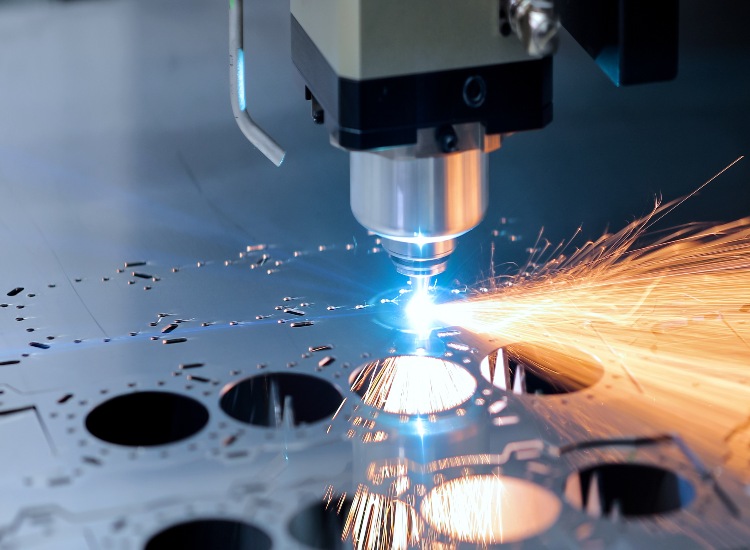
Precision machining is at the heart of modern metal die manufacturing. Complex projects cannot rely on general machining tools alone. They demand high-accuracy equipment, strict process control, and a skilled team. Every micron matters when building dies for automotive, aerospace, and electronics. Precision machining ensures that even the most complex die projects achieve consistency, durability, and performance. The Role of Precision Machining in Modern Metal Die Manufacturing Precision machining differs from conventional machining through its ability to achieve ultra-tight tolerances. While traditional methods may allow slight deviations, die production cannot risk inaccuracies. Automotive stamping dies or aerospace die components require consistent precision across thousands of parts. In Europe and North America, customers expect strict compliance with ISO standards. This drives the industry to invest in advanced CNC machining for dies and robust quality assurance systems. Challenges in Complex Metal Die Projects Complex die projects often involve multi-step processes and intricate geometries. The challenges include maintaining wear resistance and minimizing tolerance buildup. Even small errors can accumulate, leading to production failures. Customers frequently raise concerns about efficiency, cost, and tool life. For example, in high-volume automotive stamping, downtime caused by inaccurate dies translates directly into financial loss. Accurate machining reduces these risks and builds customer confidence. Advanced Precision Machining Techniques Used in Metal Dies Manufacturers employ advanced methods such as CNC milling, EDM, precision grinding, and laser cutting. Five-axis machining enables the production of intricate shapes that were previously impossible. High-precision inspection equipment ensures dimensional accuracy at the micron level. These combined techniques guarantee stability throughout the die lifecycle. By leveraging precision machining services, companies meet demanding specifications without sacrificing production speed. Custom Design Support with Precision Machining Every complex die project begins with a tailored design process: concept, prototype, validation, and batch production. Accurate machining plays a key role in transforming digital models into physical components. This ensures that custom metal die design requirements are met without compromise. In Western markets, customers value flexibility and adaptability. Accurate machining enables manufacturers to deliver personalised solutions that align with industry-specific needs. Enhancing Durability and Performance of Metal Dies Durability is critical in reducing costs and improving reliability. Material selection, heat treatment, and precision machining work together to extend die life. Tool steels and alloys are hardened to resist wear. Accurate machining prevents stress points and cracks. In the automotive sector, optimized dies improve cycle speed. In electronics, well-machined dies reduce burrs and ensure flawless component shapes. Accurate machining provides the durability customers demand. Precision Machining for Different Industry Applications Different industries place unique demands on metal dies. In automotive manufacturing, dies must handle high-speed stamping of thin components. Aerospace industries require lightweight yet durable structures, often involving advanced alloys. Electronics rely on dies to produce small, complex parts with micro-scale accuracy. Precision machining services adapt to these varied needs, ensuring consistency and efficiency across industries. Why Work with an Experienced, Accurate Machining Partner Partnering with a skilled machining provider brings clear advantages. Experienced designers and advanced CNC machining equipment guarantee reliable results. Strong project management ensures timely delivery and predictable outcomes. Moreover, compliance with Western quality standards reassures customers in Europe and North America. Choosing the right partner for complex die projects reduces risk and builds long-term trust. Accurate machining is not only about technology but also about expertise. Final Thoughts on Precision Machining Solutions Supporting Complex Metal Die Projects Precision machining is essential for modern metal die manufacturing. It enables accuracy, durability, and customization in demanding industries. A combination of advanced techniques and expert teams ensures success. Companies seeking custom metal die design benefit from reduced costs, faster turnaround, and longer die life. For organizations aiming to stay competitive, working with a trusted partner in precision machining is the next step. Contact us today to explore how precision machining solutions can support your complex die projects.
progressive metal die
Chaoyang blog

How progressive metal die technology increases manufacturing efficiency?

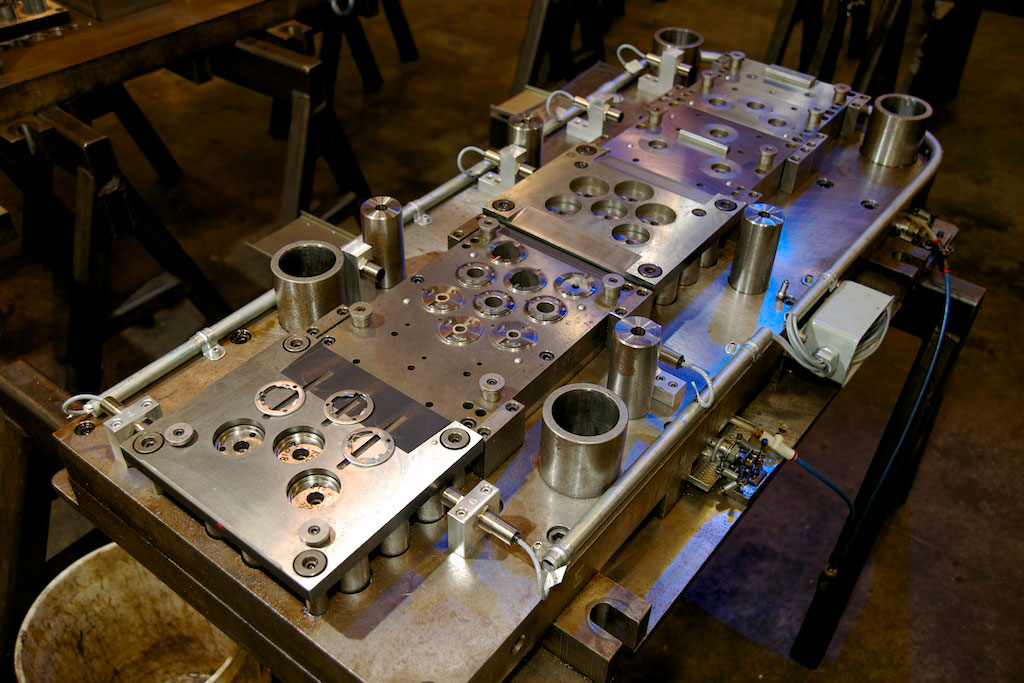
Progressive metal die technology accelerates production and lowers costs. Manufacturers use it to stamp, pierce, bend, and form parts in a single continuous operation. For high-volume runs, this approach eliminates the need for multiple setups and manual handling, thereby streamlining the process. As a result, cycle times shrink and throughput grows. Moreover, scrap falls because dies control key dimensions tightly. Additionally, progressive dies enhance consistency across long runs. This article explains how progressive metal die design, tooling, process control, automation, and maintenance increase manufacturing efficiency and output. Fewer setups, higher throughput Progressive metal dies press feed coil stock through multiple stations in one pass. Therefore, each stroke performs a sequence of operations. Consequently, you avoid repeated loading and unloading. As a result, takt time drops and overall throughput rises. Additionally, fewer setups result in less downtime between jobs. Furthermore, changeovers between similar parts take minutes, not hours. For manufacturers seeking to increase volume, this directly improves machine utilisation and reduces per-part costs. Additionally, fast tooling change systems further compress lead times. Integrated operations reduce handling errors By combining punching, bending, and forming in a single tool, the progressive metal die reduces the number of touchpoints. Thus, fewer operators handle the part during production—consequently, incidents of human error and misalignment decline. Moreover, integrated tooling ensures that critical dimensions are maintained throughout multiple operations. Therefore, components arrive at assembly with tighter tolerances. In practice, this reduces downstream rework and assembly line pauses. Hence, quality and line efficiency both improve. Also, fewer handling steps minimise the risk of contamination and damage. Material and yield optimisation Progressive metal die layouts maximise nesting and yield. Designers place operations to use the web efficiently and to reduce scrap strips. Therefore, you save raw material on every coil. Additionally, progressive dies can include perforations or micro-features that support automated separation later. As a result, you reduce waste handling and cost. Moreover, when combined with just-in-time coil supply, inventory and capital are tied up in stock. Thus, overall material efficiency improves; additionally, yield gains result in a lower environmental impact and reduced handling costs. Faster tool validation and repeatability Validating tools in a progressive metal die environment yields long-term benefits. After the final setup, the die repeats the same sequence precisely. Therefore, you get consistent parts across shifts and operators. Additionally, instrumented runs and initial capability studies enable the establishment of baseline metrics quickly. Then SPC monitors keep control over critical dimensions. Consequently, you reduce variation and reject rates. Also, repeatability enables a confident ramp-up for new programs. Moreover, documented settings cut setup time for repeat jobs and support continuous improvement. Automation and inline inspection Progressive metal die presses integrate well with automation. Robotic part pickers and conveyors continuously remove finished parts. Furthermore, inline vision or laser gauges verify critical dimensions in real-time. When a trend appears, the system flags or halts production. Therefore, corrective actions happen sooner rather than later. In addition, automation reduces idle time and operator fatigue. As a result, you sustain high throughput without sacrificing quality. Additionally, automated sorting and stacking simplify downstream logistics and packaging processes. Maintenance strategy and lifetime tooling Proper maintenance extends die life and maintains tight accuracy. Plan preventive maintenance on a cadence based on the number of strokes and material abrasiveness. Also, inspect punches, pilots, and stripping surfaces frequently. Replace wear parts before they create burrs or tolerance drift. Moreover, modular tooling enables you to swap worn stations quickly. Consequently, the mean time to repair falls, and uptime increases. Finally, track tool life data to optimise replacement intervals and reduce unexpected stops. Additionally, a parts-kitting strategy further shortens repair time. Economic and production ROI of the metal die Adopting progressive metal dies pays back through lower labour, less scrap, and higher output. Calculate ROI, including tool cost, reduced cycle time, and material savings. Moreover, consider softer gains, such as fewer quality incidents and a faster ramp-up. For many high-volume components, such as contacts, brackets, and stamped housings, the math favours using progressive dies within a few production runs. Therefore, plan trials, run capability tests, and scale proven setups to full production. Also, factor in reduced inspection labor and lower assembly time when modeling returns. Practical implementation steps for a progressive metal die Start with a feasibility study and cost model. Next, create a die layout that maximises nesting and minimises passes. Then prototype with a pilot run and capture SPC data. Also designed for maintainability with modular stations and accessible wear parts. Train operators on quick changeovers and basic troubleshooting. Finally, review cycle data and iterate on feed, lubrication, and tension control. By following these steps, progressive metal die technology will increase throughput, reduce costs, and deliver consistent parts on a larger scale.

Metal Die
Chaoyang blog

The Impact of 3D Printing on the Metal Die Industry

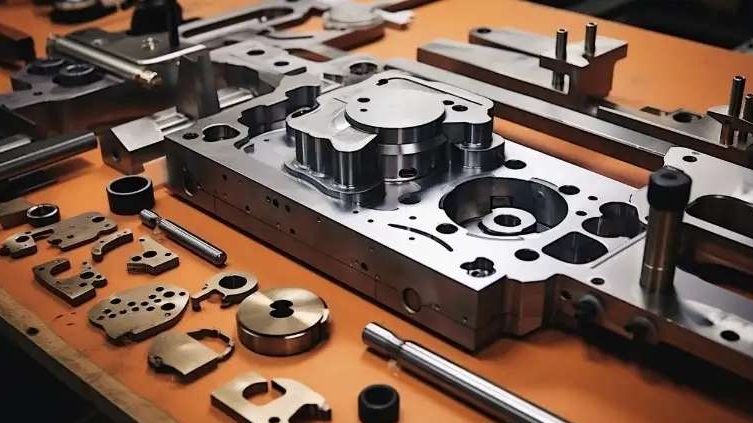
The advent of 3D Printing has transformed industries across the board, including the metal die industry. Traditionally, metal mold manufacturing involves time-consuming processes, including casting, forging, and machining. While effective, these methods often require significant time, effort, and cost to produce high-precision molds. 3D Printing can accelerate Prototyping, reduce costs, and increase design flexibility. As 3D Printing continues to advance, its impact on the metal mold industry is becoming increasingly apparent. Will the development of 3D printing technology subvert the traditional metal mold industry or become a catalyst for improving efficiency? This is a question worth exploring. Faster Prototyping with 3D Printing One of the biggest challenges in the metal die industry has always been the time required for Prototyping. In traditional methods, creating a prototype can take weeks or even months, delaying production timelines. However, with 3D Printing, prototypes can be made in a matter of days. This acceleration in Prototyping means that manufacturers can test and refine designs much quickly. Faster iteration enables faster feedback, ultimately leading to improved metal die designs. Whether it’s for a stamping die or another die, 3D Printing allows for rapid modifications, reducing lead times and increasing overall productivity. Cost Reduction through Additive Manufacturing Cost is a major factor in the manufacturing of metal die components. Traditional methods require significant material costs and labor to create complex geometries. With 3D Printing, manufacturers can build dies layer by layer, which reduces the amount of material wasted. This process, known as additive manufacturing, enables manufacturers to create highly complex shapes with less material and less waste, cutting overall production costs. Furthermore, 3D Printing can reduce labor costs associated with mold-making, tool changes, and manual adjustments. With faster lead times and less material waste, the cost of producing metal stamping dies and other tools can be significantly reduced, making production more cost-effective and competitive. Design Flexibility with 3D Printing One of the most significant advantages of metal die production using 3D Printing is the flexibility in design. Traditional die-making processes have limitations when it comes to creating complex, intricate shapes. However, with 3D Printing, manufacturers can design dies with highly detailed geometries that would otherwise be impossible to produce with traditional methods. This design flexibility is beneficial for industries that require highly customized metal stamping dies. Whether it’s a die for a unique part, a custom feature, or an unusual geometry, 3D Printing can easily accommodate these requests. This capability is driving innovation in die design and enabling manufacturers to push the boundaries of what is possible in metal die production. Improved Efficiency and Speed in Manufacturing Efficiency is crucial in the metal die industry, where delays can significantly impact overall production schedules. Traditional manufacturing methods, though reliable, can be slow. Cutting, molding, and adjusting dies can be time-consuming, resulting in prolonged production cycles. 3D Printing eliminates much of the time-consuming tooling and adjustments. By printing the die components directly, manufacturers can reduce setup times and streamline production. This increased efficiency is not only beneficial for large manufacturers but also for smaller companies or startups seeking to produce high-quality metal stamping dies without incurring costly tooling investments. As a result, companies can meet tight deadlines and fulfill customer demands more quickly. Customization and On-Demand Production Another compelling advantage of 3D Printing in the metal die industry is the ability to produce custom dies on demand. Instead of maintaining a large inventory of different die sizes and types, manufacturers can now make customized dies as needed. This flexibility proves especially useful in industries where companies frequently adjust product specifications or require unique, one-off dies for special projects. On-demand production reduces the need for significant investments in tooling and inventory. This means manufacturers can be more agile, responding to customer needs in real-time and avoiding the costs associated with keeping an extensive die stock. Custom metal stamping dies can be designed and printed to meet specific requirements, reducing waste and ensuring precise fits for unique applications. Enhanced Durability and Performance of Dies The materials used in 3D Printing have improved significantly over the years, allowing for the production of metal die components that are not only lightweight but also durable and performance-optimized. With advanced materials such as metal alloys and composite metals, 3D Printing can create metal stamping dies that have improved wear resistance, high heat tolerance, and enhanced performance characteristics. These performance improvements can extend the lifespan of dies, reducing the frequency of replacements and repairs. In industries where downtime is costly, having durable and high-performing dies is a significant advantage. Additionally, 3D Printing allows manufacturers to incorporate design elements that improve cooling efficiency or reduce friction, further enhancing die performance and longevity. Sustainability in Die Manufacturing Sustainability has become a key concern in all manufacturing sectors, and the metal dies industry is no exception. Traditional die production methods often generate significant waste due to material removal processes, and the energy consumption can be high. However, 3D Printing can reduce waste by using only the material necessary for the component. Additionally, 3D Printing uses less energy compared to traditional manufacturing techniques. The process adds material only where needed, reducing waste. For industries looking to adopt more sustainable practices, 3D Printing offers an attractive solution for producing metal stamping dies and other components in an environmentally friendly way. The Future of Metal Dies Production with 3D Printing Looking ahead, 3D Printing is poised to revolutionize the metal die industry even further. As technology advances, we can expect to see even more efficient, precise, and cost-effective solutions for die production. The integration of artificial intelligence (AI) and machine learning with 3D Printing could lead to fully automated, self-optimizing production lines for metal stamping dies. In the coming years, more industries will adopt 3D Printing for die manufacturing, driven by the ongoing demand for faster, cheaper, and more complex solutions. As companies continue to embrace this technology, it will unlock new opportunities for innovation, efficiency, and sustainability in the production process. The Long-Term Impact of 3D Printing on the

Scroll to Top