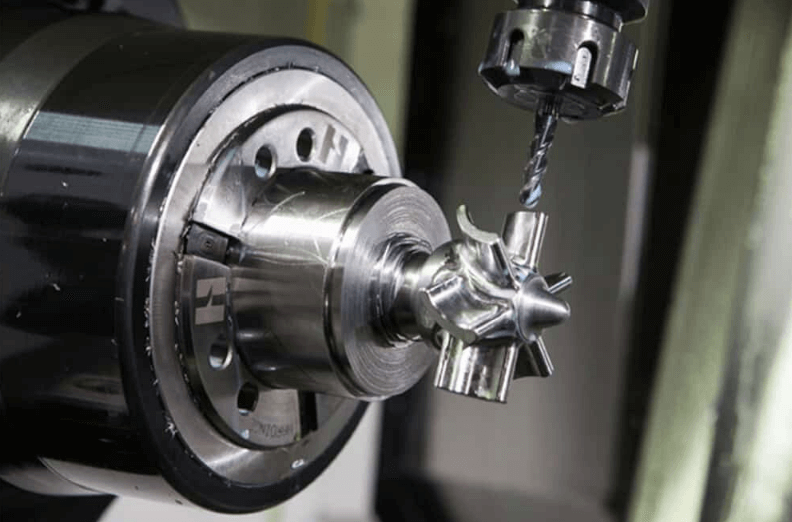
CNC machining parts

CNC machining parts
Chaoyang blog

How CNC Machining Parts Are Powering EV and Aerospace Component Innovation?

Companies in the EV and aerospace sectors require parts that meet stringent tolerances, withstand harsh conditions, and arrive promptly. CNC machining delivers on those needs. It supports rapid prototyping. It also enables low-volume production and the fabrication of complex geometries in advanced alloys. For engineers, that combination accelerates design cycles and lowers technical risk. Below, I explain how CNC machining drives innovation, providing concrete examples and sources for verification. Precision and tolerances that meet strict requirements Modern aircraft and EV systems need parts machined to micron-level precision. CNC mills and multi-axis turning cells achieve tolerances that hand methods cannot match. As a result, engineers hit performance targets for bearings, housings, and structural brackets. For example, aerospace work routinely specifies tolerances of ±0.001 inch for critical components, which CNC shops consistently deliver. Consequently, designers rely on CNC machining to meet certification and safety margins. Advanced materials machining for strength and weight savings Lightweight alloys drive both industries. Aerospace uses titanium and Inconel for strength at low weight. EV manufacturers use aluminum and high-strength steels to cut vehicle mass. CNC machines handle these alloys with the proper tooling and process control. Moreover, research indicates that machining surface integrity is crucial for fatigue life in titanium and nickel alloys. Therefore, controlled CNC processes produce parts that meet fatigue and thermal requirements in engines and battery systems. Rapid prototyping shortens design cycles Product teams iterate quickly by moving from CAD to machined prototypes in days, not weeks. Digital manufacturers such as Protolabs and Xometry specialize in on-demand CNC runs for startups and OEMs. As a result, EV designers can test motor housings, mounts, and brackets early. Likewise, aerospace engineers can validate fit and function before committing to expensive tooling. Consequently, rapid CNC prototyping accelerates time to market and reduces costly late-design changes. Complex geometries and multi-axis capability enable innovation Multi-axis CNC enables teams to produce features that previously required assembly. Engineers can machine complex cooling channels, tight internal pockets, and curved surfaces in a single setup. Therefore, designers reduce part counts and join operations. In aerospace engines and EV power electronics, fewer joints mean fewer failure points. Additionally, advanced fixturing and CAD/CAM strategies enable the production of these complex parts at scale with repeatability. Supply chain flexibility and low-volume production EV startups and tier-one aerospace suppliers both need flexible suppliers. CNC shops provide short runs and fast turnarounds compared with hard-tooling methods. Consequently, firms scale production in a staged way—prototype, pilot, then ramp. Moreover, digital manufacturing platforms aggregate capacity, providing designers with access to global CNC capacity without the need for lengthy vendor searches. This flexibility reduces inventory risk and supports iterative design choices. Quality control, inspection, and certification readiness Aerospace and EV parts require traceable quality data. CNC providers integrate inline inspection, first-article reports, and coordinate measuring machine (CMM) validation. Therefore, suppliers deliver documented conformity for audits. In aerospace, documented process control supports FAA or EASA qualification steps. In EV powertrains and battery modules, consistent dimensional data reduces assembly variance and improves yield. As a result, CNC machining shops act as partners in certification, not merely vendors. Real-world case studies showing measurable impact Digital manufacturers highlight concrete wins. For example, a micromobility EV maker sourced half its parts through an on-demand CNC partner and sped production significantly. Similarly, aerospace parts machined from titanium and nickel alloys exhibit high surface integrity and reduced lead times, as reported in published case studies. These examples show how CNC machining delivers both performance and practical business benefits—faster launches, better assemblies, and predictable supply. Actionable deployment tips for CNC machining parts Start by defining your critical tolerances and materials. Then, choose suppliers with relevant alloy experience and multi-axis capacity. Next, run small prototype batches to validate fit and function. Also, require documented inspection plans and material traceability. Moreover, consider hybrid workflows—utilizing CNC for critical features and additive methods for complex cores—to optimize both cost and performance. Finally, plan supply continuity by using digital manufacturing platforms or multiple qualified shops. Following these steps lets you use CNC machining part approaches to accelerate innovation, control risk, and scale production reliably.

CNC machining parts
Chaoyang blog

What steps does CNC machining parts require?

CNC machining delivers the precision that modern manufacturing demands. However, producing reliable components requires a straightforward, repeatable workflow. Each step reduces risk and improves consistency. Therefore, factories follow a sequence from design to delivery. Below, we walk through the practical steps needed to produce high-quality CNC machining parts. We cover design, material choice, programming, setup, machining, inspection, finishing, and shipping. Moreover, we explain why each stage matters and how it links to the next. Design and CAD modeling First, engineers create a CAD model. The model defines geometry, tolerances, and surface finish. Then, designers perform a manufacturability review. They check for thin walls, deep pockets, and undercuts. Next, they add critical dimensions and notes for machining. Importantly, early design for manufacturability saves time and money later. Therefore, good CAD work simplifies CAM programming and reduces errors. In short, the design stage sets the foundation for all downstream work in a CNC machining part.   Material selection and blank preparation After design, choose the right material. Common choices include aluminum, stainless steel, titanium, and engineering plastics. Material affects strength, weight, and machinability. Moreover, suppliers must provide stable, defect-free stock. Then, technicians cut raw material into blanks sized for the machine. They also inspect for impurities and internal defects. Proper blank preparation prevents vibration and part shift during cutting. Thus, careful material selection and prep directly support dimensional accuracy in CNC machining parts. CAM programming and toolpath optimization Next, CAM software converts CAD into G-code. Programmers generate efficient toolpaths and sequence operations. They select speeds, feeds, and tool changes. Then, they simulate the program to catch collisions and errors. Significantly, optimized toolpaths reduce cycle time and tool wear. Also, programmers include coolant strategies and lead-in paths. Consequently, solid CAM work improves quality while lowering cost. In short, careful programming forms the engine that drives accurate CNC machining parts. Machine setup, tooling, and fixturing Before cutting, technicians prepare the machine. They install tooling, set offsets, and mount fixtures. Accurate fixturing holds the part firmly and repeats locations across runs. Additionally, they check spindle runout and tool balance. Then, they load the program and run dry cycles if needed. Setup verification ensures the physical setup matches the digital plan. Therefore, a precise setup minimizes rework and scrap. Ultimately, good fixturing and tooling underpin repeatable CNC machining parts. Machining operations and in-process control With setup complete, the machine executes the program. Operations include milling, turning, drilling, and tapping. Operators monitor tool wear, chip formation, and machine loads. Moreover, they measure key features during the run when necessary. If a tool shows wear, they change it and adjust offsets. Real-time checks prevent costly failures. In automated cells, sensors can halt the process on anomalies. Hence, active in-process control maintains tolerance and surface finish, which leads to reliable CNC machining parts. Inspection, metrology, and quality assurance No parts ship without inspection. Technicians use calipers, micrometers, and CMMs to verify dimensions and geometric tolerances. They also check surface finish and concentricity. First-article inspection validates the setup before complete production runs. Then, statistical process control tracks variation across batches. Nonconformances trigger root-cause analysis and corrective actions. Additionally, traceable records support customer audits and certifications. In effect, rigorous QA systems ensure each batch of CNC machining parts meets the required standard. Post-processing, finishing, and assembly After machining, parts often need secondary work. Typical steps include deburring, shot peening, heat treatment, anodizing, and coating. Some parts require precision grinding or honing to meet final specs. Then, subassemblies and function tests confirm fit and performance. Furthermore, cleaning removes coolant and chips before packing. Each finishing step improves durability, corrosion resistance, and appearance. Therefore, thoughtful post-processing readies components for demanding applications and guarantees the performance of CNC machining parts. Packaging, traceability, and delivery of CNC machining parts Prepare parts for shipment and installation. Clean and protect components, then pack them to prevent transit damage. Add labels, batch numbers, and inspection reports. Also, include material certificates and compliance documents when required. Maintain traceability so any issue can be traced back to the process data. Then, choose reliable carriers and confirm delivery schedules. In doing so, you preserve quality from factory to field. Ultimately, thoughtful packaging and traceability complete the lifecycle of CNC machining parts.

Scroll to Top